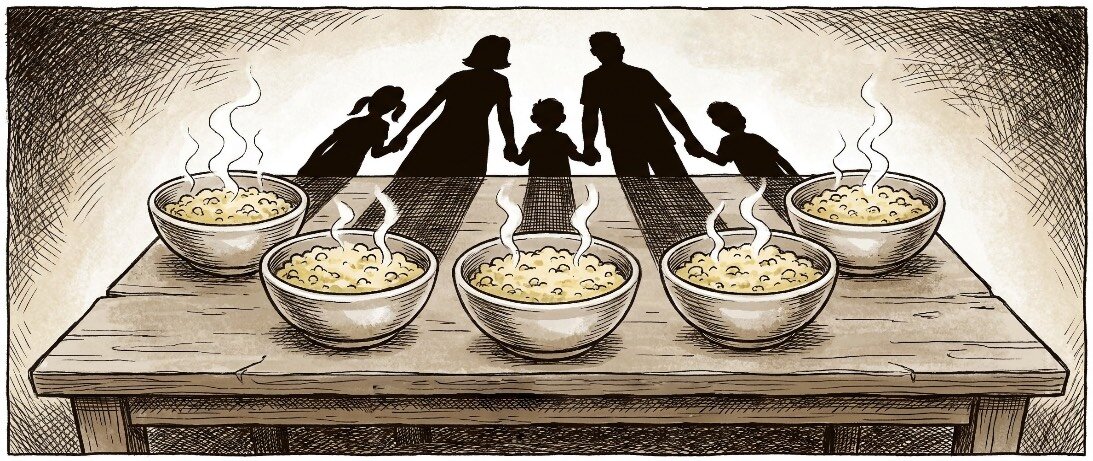
The word hadn’t entered my mind for at least half a century and I have no idea why it did the other day. It’s an odd word, one most people don’t hear often if ever. I wondered if it were some made-up family thing. It had daily use (well, nightly use) in our house as I was growing up.
The word is: “bedlunch.” And it turns out it’s still used, though not commonly and not everywhere.
It is apparently employed in Newfoundland, according to a radio program that is worded as if it’s on public radio (yup!), but they don’t go into any detail. According to a person on YouTube, it is used (and practiced) in Maine as well. One website implies kind of snottily that it may be French.
Though I have affection for Newfoundland and a sister who lives now in Maine, neither I nor my family has any connection with either of those places and to put us in France you’d have to go back 900 years, when we crossed the channel in an unsuccessful attempt to bring order to England. (Indeed, over time the barbarism seems to have traveled the other way.)
The definition of “bedlunch” is certainly within your first three guesses. It is a small meal had before bed. Sometimes it is, well was, as simple as the standard cookies and milk. But sometimes it might be more like a dessert, and milk.
And sometimes, especially cold winter mights, it could be a little more elaborate.
Sometimes it was even mush!
What? You don’t know mush? Where were you brought up?
Mush, sometimes called “cornmeal mush” to enlighten the benighted masses, is like grits for civilized people. (Grits is made by coarsely grinding hominy — corn soaked in lye — then boiling it. I suppose you can still get canned hominy at the grocery store or perhaps places that sell cattle feed; I’ve never looked, though we did have the canned stuff from time to time, reason unknown. Canned hominy has an unusual texture.)
Properly prepared, mush is heavenly. It is smooth — 240-grit sandpaper to hominy grits’ 50-grit. It can be white or yellow, depending on the cornmeal used. I always wondered if you could grind multicolored Indian corn to make festive mush, but I’ve never seen it done.
You make mush by boiling cornmeal in slightly salted water until it is cooked. You must stir it constantly until it is thick but not too thick. You know, like store-bought pudding mix.
You then put it in bowls to be consumed before it solidifies. A bit of butter on top is good; on occasion you might even add a little milk. Heathens put sugar on it, but that’s like putting sugar on mashed potatoes.
Speaking of mashed potatoes, if you have left-over mashed potatoes you can stir them up in the morning with an egg or two and make hamburger-sized patties and fry them until they’re pancake brown and have them for breakfast.
Which I bring up because one of life’s true pleasures is fried mush. You fill a slightly tapered jelly jar — you know, the ones painted on the outside with cartoon characters for use as drinking glasses once the jelly is gone — and put it in the refrigerator overnight. Next morning turn the glass over on a cutting board and let the mush come out like cranberry sauce from a can, then slice it, a quarter inch thick, no thicker, and fry it in the morning’s bacon drippings until it is well browned. It’s crunchy on the outside, good and soft on the inside, and warms you all the way through. Whenever I make mush, which isn’t often, I skip the bowl part and pack it all up to be fried. There’s little better.
(You can also make enough that you can put a few fried disks of it in a bowl then cover it with chili, the way they used to arrange slices of banana in the bowl before pouring in vanilla pudding, or vanilla wafers before adding banana or butterscotch pudding. The chili thing is better, trust me.)
A hot bedlunch alternative, occasionally, was a product called Malt-O-Meal, a wheat-and-barley substance that was heavily advertised during my childhood. It was fine hot, though I can’t testify to the edibility of fried Malt-O-Meal leftovers.
Ordinary cereal could also be standard bedlunch, but there were favorites here, too. I always had a fondness for both puffed wheat and puffed rice. These are kernels of little more than air. Add milk and the race is on to get it all eaten before it has entirely become the consistency of sodden Kleenex. (A version is now made for use as packing peanuts; it too loses its substance once exposed to moisture, and I expect it is brought to us by the same people who think corn juice belongs in gasoline, people who have corn to sell and are determined to do it no matter the consequences.)
Sweet cereals are of no use for bedlunch. Various trendy brands of non-sweetened cereal came and went. One that comes to mind is Kellog’s OKs. These were championed by a cartoon Scot called “Otis.” They were Cheerios with an extra letter added. We had OKs but not Cheerios. I do not know why, but we liked it that way.
The ship at our house had sailed before the horrible Alpha-bits came along in all their tooth-rotting 26-letter glory. Post Grape-Nuts were fine because they were so interesting. They were flavorful little stones that were fine when eaten dry but came to resemble canned dogfood when milk was added. Good, but not for bedlunch — better dry as a snack during the day. (I wonder why they were never adapted to breading chicken before frying, the way Special K was.)
There would occasionally be novelty cereals. One that comes to mind was corn flakes with freeze-dried strawberry in them. Awful.
In fact, the only reliable cereals came from our almost neighbors at Checkerboard Square in St. Louis. To maintain company consistency they probably should have been called Purina Human Chow, but they weren’t. Instead, they were Chex. There were three varieties: Corn Chex, Rice Chex, and the best, Wheat Chex. They were really good and still are. Good and good for you. Especially Wheat Chex.
One of the best aspects of bedlunch was how it involved the whole family being together just before we retired to our respective bed rooms for the night’s sleep.
Oh, well. All gone now. Too bad. If you have a family I recommend it, exactly as I have described it.
Sometime I’ll tell you about the breezeway. We all had them, except for those who had what they called “carports,” who were regarded with suspicion. 
Dennis E. Powell is crackpot-at-large at Open for Business. Powell was a reporter in New York and elsewhere before moving to Ohio, where he has (mostly) recovered.
Pass along this article.
Never Miss Another Article from Dennis E. Powell.
You need to be logged in if you wish to comment on this article. Sign in or sign up here.


Start the Conversation