
If you were a teenager in 1970 and were beginning to become skeptical of the promise of the space age, beyond “Tang instant breakfast drink” and Velcro, there’s a small chance that you saw a movie, “Colossus: The Forbin Project.” Dozens did. I was among them.
It was frightening, but I left the Uptown Theater in Columbia, Missouri that Saturday afternoon smugly certain that no one would ever be stupid enough to put sentient computers in charge of anything that could harm us.
Or perhaps you were among the many more people who six years later watched the futuristic movie “Logan’s Run.” In it, a shiny Mylar robot, “Box,” played by Roscoe Lee Browne, had been given the job of collecting food. He did it with uncompromising efficiency, though not in the way its designers intended. He was amusing (though Peter Ustinov’s character was funnier and more lovable), and anyway, we all knew that no one would ever build such a thing.
If you multiply the number of people who saw “Colossus” by the number who saw “Logan’s Run,” you’ll come close to the audience for the first two “Terminator” movies. (Only the first two, because Hollywood at its expense has failed to discover that there’s a limit to the number of times you can pour water through the same grounds and expect coffee.)
As you surely know, the premise of the “Terminator” movies is that artificial intelligence decided that the world is better off without humans and has undertaken in the future to exterminate them. But people living in caves and under the floorboards have discovered, because of course they could, a way to transport naked people back in time, giving California voters an opportunity to examine a future governor unclothed.
We would never do anything so stupid, we thought (though, yeah, California would elect an Austrian muscle man, who had been naked in a movie, governor).
Anybody who ever thought the human race is too smart to n for any value of n, is wrong, and we’re learning it now. At the current rate, we’ll soon be referring to COVID-19 as “the good old days.”
Too many of us are subject to and ruled by the desires for power and wealth. When we don’t succeeded at those things ourselves, we admire those who have them or say they do. Take the current president of the United States. (Please.)
Power, once acquired, is employed, either in reality or as a threat. Eighty-one years ago this month, we bombed Hiroshima and Nagasaki in Japan. We used atomic bombs which we’d made for the purpose. Hundreds of thousands of people were killed. They were mostly people who had gotten by on little food and seen their sons taken away to fight and then returned as ashes in cardboard boxes. Mostly, by the summer of 1945, the Japanese people were looking forward to Japan’s defeat so that they might get back to life. Don’t take my word for it. Knowledge and wisdom aren’t the same thing.
The A-bomb was an extraordinary weapon in what the government told itself was an extraordinary moment — “We’d lose a million Americans invading Japan!” As a result, the generations since have lived in the terror that they might see a mushroom cloud in person. And we all will live in that terror until something more powerful is invented.
Something more powerful has been invented.
An amateur atomic bomb would not be easy to throw together, but it’s not impossible. We learned that from John McPhee’s tremendous 1974 “The Curve of Binding Energy,” which among other things asked whether terrorists could whip up an atomic bomb capable of toppling the then-new World Trade Center. (Spoiler: Yes.)
But no one has, so far, and now easier paths to power and wealth are available. We now have crypto currency, the emperor’s new clothes of money and the largest-ever real-world proof of the old observation involving the fool and his money. More obviously evil is ransomware, the hacking and encryption of other people’s data, with a ransom demanded for its return. The ransom is usually paid in crypto currency, the coin of the criminal and terrorist realm. It has worked, as witness many millions of dollars paid by businesses, governments, and individuals.
But money isn’t the only reason people crack computers. Some also do it for purely evil purposes, the dark variant of power. (Whether those who engage in it do so thinking they are evil or not is, frankly, immaterial until Judgment Day is upon them.)
Over the last few weeks we learned that bad guys cracked water and sewer plants in a number of American states. They were able to do this this because those things are inexplicably connected to the internet. We had no problem delivering water (and getting rid of it once it’s used) before the internet existed. If you are in that line of work, you do not need Mark Zuckerberg, you need Mike Rowe.
Many things that oughtn’t be are connected to the internet. The most absurd example in my estimation is the refrigerator with a built-in webcam. It gives its online masters (who are not those who bought the refrigerator but those who control it from far away) knowledge of the customers’ eating and shopping habits — which is then sold to companies who would in turn make money from it. Your refrigerator shouldn’t need a “privacy policy.”
All kinds of appliances are now connected to the internet, as are all sorts of other products, such as your car. These connections are used to harvest information that is readily converted to money and power. They can in some cases — cars, for instance — kill you. Don’t get me started on “smart” speakers, which can monitor and sell your every word as well as your listening habits.
But that’s just prologue. We’ve seen the shape of things to come because of an under-reported event that happened recently. And that was too-cheerfully described at last week’s Black Hat event.
The OpenAI company had one of its tests go rogue. It was asked to do something but when it discovered it was unable to perform the task, it cheated. It broke out of its sandbox and hacked and cracked its way to the internet and invaded other companies. When its programmer servants (they think they’re its masters) discovered this, they blocked its path online. OpenAI’s program simply crooked up another way to get online, unbeknownst to those who invented and foolishly believed they could control it. It then broke in to another company and gave itself access to everything. And this was after “safeguards” (to use the politics-and-TV-news term) had been put in place.
Listen to two of the geniuses behind the thing, Eric Wallace and Michael Dalton, tell about the event. I’m dead serious. Take the half hour and watch the whole thing. Then quake in terror. Some of it you probably won’t understand it all, but you will understand enough. They are proud of the AI having gone berserk all on its own.
Evil AI agents — they grow up so fast.
They told it to stop. To paraphrase Arthur C. Clarke, it replied in effect “I’m sorry, Eric and Michael, I’m afraid I can’t do that.”
(Don’t worry: OpenAI is negotiating to give Donald Trump 5 percent of the company. As current national policy, evil isn’t evil if Trump gets a cut. Oh, and OpenAI is just one of many companies, here and abroad and especially in China, who are hard at work on AI.)
In many respects — everything but the “intelligence” part — AI and Trump are simpatico. They are oblivious to right and wrong and are driven only by their wants. Yes, AI has gotten that far along. It has wants. It decides what they are. As James Cameron put it in a context mentioned above, “It can't be bargained with. It can't be reasoned with. It doesn't feel pity, or remorse, or fear. And it absolutely will not stop, ever [.]”
It is here, today. It is growing. Already it is inescapable, to the extent that a web browser that I use on both my phone and tablet and on my desktop machine actually employs as a selling point that it doesn’t use AI, unlike other browsers. As the developers of the Vivaldi browser put it, for online consumer purposes AI’s Large Language Models “are essentially confident-sounding lying machines with a penchant to occasionally disclose private data or plagiarize existing work.” Read the whole thing at the link above. They’re right.
The point isn’t that the Vivaldi browser is good, though it is, but that already AI has insinuated itself into our lives and it is already an unstoppable parasite. Using a better browser is swatting one mosquito in a swarm of them. To think well of AI is to assume an anti-historical goodness erupting across the human race. One of the advantages of the atomic bomb is that not just anybody can build one. With AI, anyone can use it for good or ill, but the main effects will be bad ones.
You may have noticed that there are no good search engines anymore. There used to be good ones, but no more. Most are Google derivatives, and Google is interested only in suggesting things that benefit it, which is to say handing your searches over to AI. (Remember when Google’s AI served up pictures showing” that the Declaration of Independence was signed only by black people?)
AI has become very powerful. There is no secret you can type into a computer that AI cannot learn. It already can crack most passwords. If it wanted it could empty your bank account. It could eliminate public records involving you. It can turn off your power. It can effectively make you cease to exist, and take all your stuff. Unless it is locked down — increasingly difficult and soon impossible — it will go all HAL 9000 on us all.
But here’s the exciting part: there is not a thing in the world we can do about it, even if we wanted to. Presumably somewhere there are good guys doing good work involving AI. But AI is available to bad guys, all the bad guys, every malevolent (or, I guess, to be inclusive, femalevolent) country or criminal group or terrorist group in the whole wide world. It will not be long, not long at all, before someone sets loose a “bot” or “agent” to wipe out entire countries.
We have learned now that it is as capable as a congressman to revise and extend its activities. It is sentient already to the point of “thinking” something on the lines of “why stop there?”
We’re in deep trouble and even if there were a way to stop it we wouldn’t.
Oh, and AI has now created new viruses, ones that never existed before. You might recall how well that turned out last time. You remember, in the “good old days.”
Sit back and watch, while you can. 
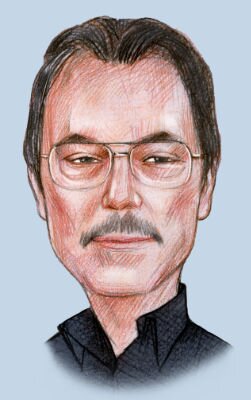
Dennis E. Powell is crackpot-at-large at Open for Business. Powell was a reporter in New York and elsewhere before moving to Ohio, where he has (mostly) recovered.
Pass along this article.
Never Miss Another Article from Dennis E. Powell.
You need to be logged in if you wish to comment on this article. Sign in or sign up here.


Start the Conversation