Everything considered, it was inevitable. If there’s any surprise, it’s that it hadn’t happened before now.
Then again, maybe it had.
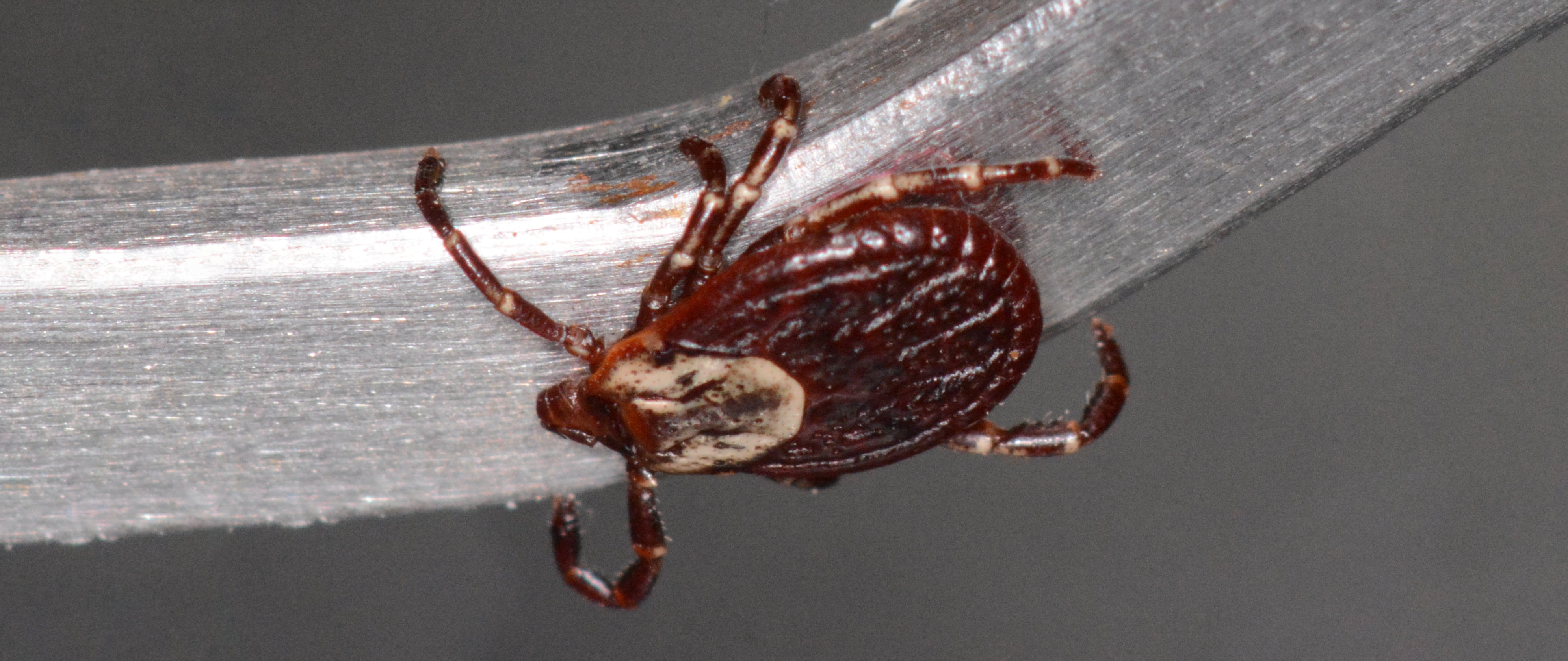
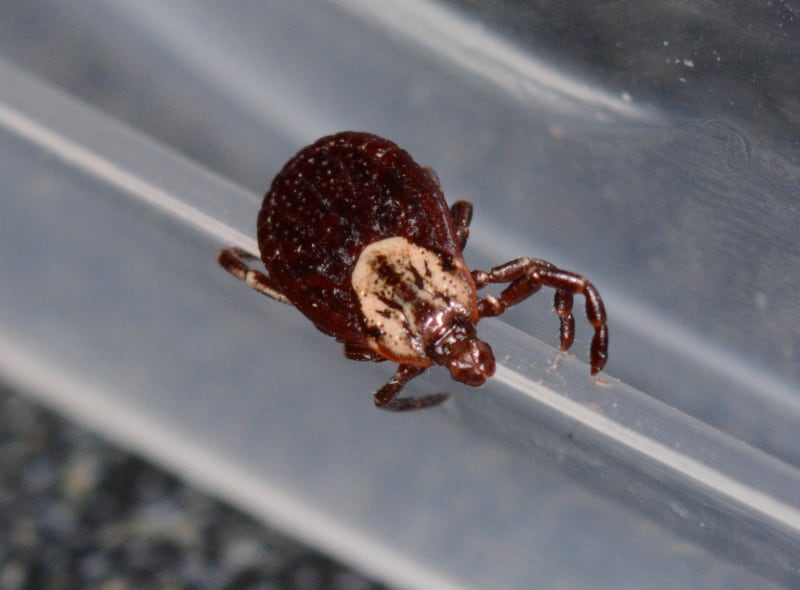
I awakened Monday to a very persistent itch on the inside of my left leg, above the knee. Looking, I saw a dime-sized red area, like a bug bite. At its center was a tick. Specifically, it was a lone-star tick, which gets its name not to honor Texas but because of the white spot in the middle of its tiny back if it’s a female.
A few seconds later, the arachnid had gone to its eternal reward and I set about such first aid as there is for tick bites: drenching the area with strong rubbing alcohol and scrubbing it with a wad of cotton. Then I washed it thoroughly with soap and water and finally dabbed on some over-the-counter “triple-antibiotic ointment.”
Which didn’t eliminate the concern, but it diminished it somewhat.
Ticks join all the true bugs on my list of arthropods whose extinction I would welcome. If any of them serves a useful purpose that purpose is not obvious. Relatives of spiders, not insects at all, ticks attach to the skin and suck out blood that does not belong to them.
There are three varieties especially common to the Midwest and much of the rest of the U.S. All of them carry diseases, not always but often enough to be a worry. All of them carry diseases capable of killing you.
It you have encountered any ticks, they are most likely the common dog tick, pictured above. It has that name because if you have a dog that runs around outside, especially at this time of year, you are likely to have to pull dog ticks off of it. If you’re lucky, you’ll get it before or soon after it has attached itself, but you might not find it until it has grown to the size of a navy bean. (That’s an un-engorged dog tick I pictured above.) Even in its uninflated state it’s the largest of the native ticks. A few times each year, after I’ve been working or playing outdoors, I’ve felt something crawling under my clothing, looked, and found a dog tick looking for a place to settle in. They seem especially fond of the elastic area at the top of underwear.
I remember a startling incident in the mid-1970s. It was a warm May day (May, it turns out, is the prime month for hungry ticks). I’d gone with my girlfriend on a picnic in a nice, shady, woodland spot overlooking the Missouri River. Afterwards, as we walked back to the car, I noticed that her clothing was entirely covered in dog ticks. Hundreds of them. Mine, meanwhile, had none. The mystery of why they liked her but not me was never authoritatively solved. I’ve heard several theories, some of which seemed to make sense. To the best of my knowledge she didn’t get bitten.
In the last few decades, the variety of ticks available to feed on us has grown. The range of the much smaller lone-star tick, a third the size of the dog tick and therefore correspondingly difficult to spot, seems to have grown considerably in the last few years. I found one in the wild, on me, right after the thaw this year.
Then there is the even smaller deer tick. Lately it has been publicized as the black-legged tick for some reason — people are coming to hate deer enough already, I guess. The deer tick got famous beginning in the early 1980s with the discovery of “Lyme disease” in Lyme, Connecticut. The illness it imparts was first called “Lyme arthritis” because one of its many symptoms is the swelling of knees and other joints.
My first encounter with this tick and its fiendish effects came one Saturday afternoon in 1981, when I read in a WOR Radio newscast a small item — it was a slow news day — that the State of New Jersey had decided to start keeping a record of the cases of Lyme arthritis in the state. I then spent the rest of the afternoon answering the phone. I had made the mistake of including the item in a newscast during Bernard Meltzer’s show, which was apparently enjoyed by every hypochondriac in New York, New Jersey, and Connecticut (though judging by accent, mostly Brooklyn). I finally started telling people that if they were sick, it made sense to call the doctor, not the radio station. One woman said that surely “Doctor” Meltzer (he wasn’t a doctor of anything, but people called him that anyway) would provide a better answer, so would I, useless, connect her with him (I couldn’t and didn’t).
We all dealt with the dreaded deer tick and its Lyme disease, first in the northeast, then elsewhere. Everybody was talking about it — except doctors. Though easily cured early on by a course of tetracycline, physicians wouldn’t countenance any suggestion of Lyme disease. (Maybe those callers took my advice and mobbed the emergency rooms. Who may have told the unhappy GOMERs to call the radio station.) The disease is a spirochete, not unlike syphilis, and after initial symptoms it goes dormant before emerging in its tertiary stage, where it is more difficult to treat and can in extreme cases kill you. The father of one of my best friends, already infirm, was diagnosed with an advanced case shortly before his death.
Now, 45 years later, Lyme disease remains the trendy, northeastern megalopolis tick-borne disease, and with the increase in deer populations the range of both the deer ticks and lone-star ticks has grown. Lyme disease is scarcely the only dangerous pathogen carried by ticks. There’s no human-biting tick that doesn’t carry one or more serious diseases, often potentially fatal. But Lyme disease gets all the press, and based on my experience it’s easy to see why.
One diagnostic problem is that though they are caused by many different pathogens, the initial symptoms of diseases you can catch from a tick are remarkably similar. (I mentioned my bite to a friend in Japan, who wrote back, “Hey, are you okay? I hope that tick doesn't cause headaches or muscle aches, and that you don't develop a fever.” The symptoms are known even on the other side of the world — and Japan is home to another disease spread by ticks, severe fever with thrombocytopenia syndrome, known as SFTS, which kills up to a third of those who contract it.)
The symptoms of diseases carried by domestic ticks aren’t just similar to each other but also similar to many other illnesses. Sit down and make a list of the diseases you know of that present “flu-like symptoms.” If you go to the doctor complaining of what you think was a tick bite and the best you have for the physician is a real or possible tick bite and “flu-like symptoms,” he is unlikely to order up the tests necessary to find out for sure. (The medical profession once sought successful treatment of patients, but now it is about seeing as many patients as possible as quickly as possible and billing the insurance company or the government or both the maximum amount. It’s now big business, about 18 percent of the economy.) Which is to say that until you’re at — but not at the point of passing through — death’s door, you’re pretty much on your own. (It doesn’t hurt to save the tick in a tightly sealed container, then go online to see if anyone near you is doing research on ticks. That project might do the tests necessary to see if the tick will make you sick.)
As I dug deeper into the reading I found some fairly specific symptoms, beyond flu-like ones, that I have experienced, not recently but during past summers. I was also puzzled that my body reacted to Monday’s bite as quickly as it did. Had I been bitten and infected before and do I now possess antibodies against whatever the tick had on offer? I have no idea, nor a way of finding out.
Which in turn tells us that we need to do all we can to avoid getting bitten by ticks. Which I thought I was doing, but apparently not.
So what can we do? Several things, actually.
The first defense is keeping the ticks from biting you. That means long pants and long sleeves, boots, and high socks when you go into the woods or, for that matter, the grass. This is of marginal help — I’ve found ticks on my skin even after mowing in knee-high Muck boots. Keeping the lawn mowed and the shrubs trimmed back helps, too. This is just part of it.
It’s useful to apply a product containing a substance called “permethrin” to clothing you wear outdoors. Spray it on, let it try thoroughly before wearing the clothing or boots, and it will survive multiple washings. Do not spray it on your skin.
The single best product for keeping ticks off your skin is the insect repellent known as “Off! Deep Woods” which contains a goodly amount of “DEET.” It’s generally safe. It smells bad and can harm synthetic fabrics. If you don’t like DEET, there are essential oils, such as eucalyptus lemon oil, that are effective in keeping bugs away if you don’t mind smelling like a cough drop. A substance called “picardin” is largely odorless and in studies has been shown to keep ticks and biting insects at bay for as much as 12 hours. There are many commercial products that contain it. Both picardin and DEET are safe to put on your skin, and picardin won’t melt your clothes if they’re made of plastic. (Or anything else.)
If your outdoor activities are limited to a relatively small area, there are various tick repellents and tick-i-cides that you might find useful. They are usually sold with pets in mind, so if you have a veterinarian you might call to get advice as to a brand that’s useful in your area.
Once you come indoors, best to take a hot shower soon.
There’s more, and the CDC is happy to tell you all about it.
And if you feel as if there might be ticks crawling on you, check.
Because they might be. 

Dennis E. Powell is crackpot-at-large at Open for Business. Powell was a reporter in New York and elsewhere before moving to Ohio, where he has (mostly) recovered.
Pass along this article.
Never Miss Another Article from Dennis E. Powell.
You need to be logged in if you wish to comment on this article. Sign in or sign up here.


Start the Conversation