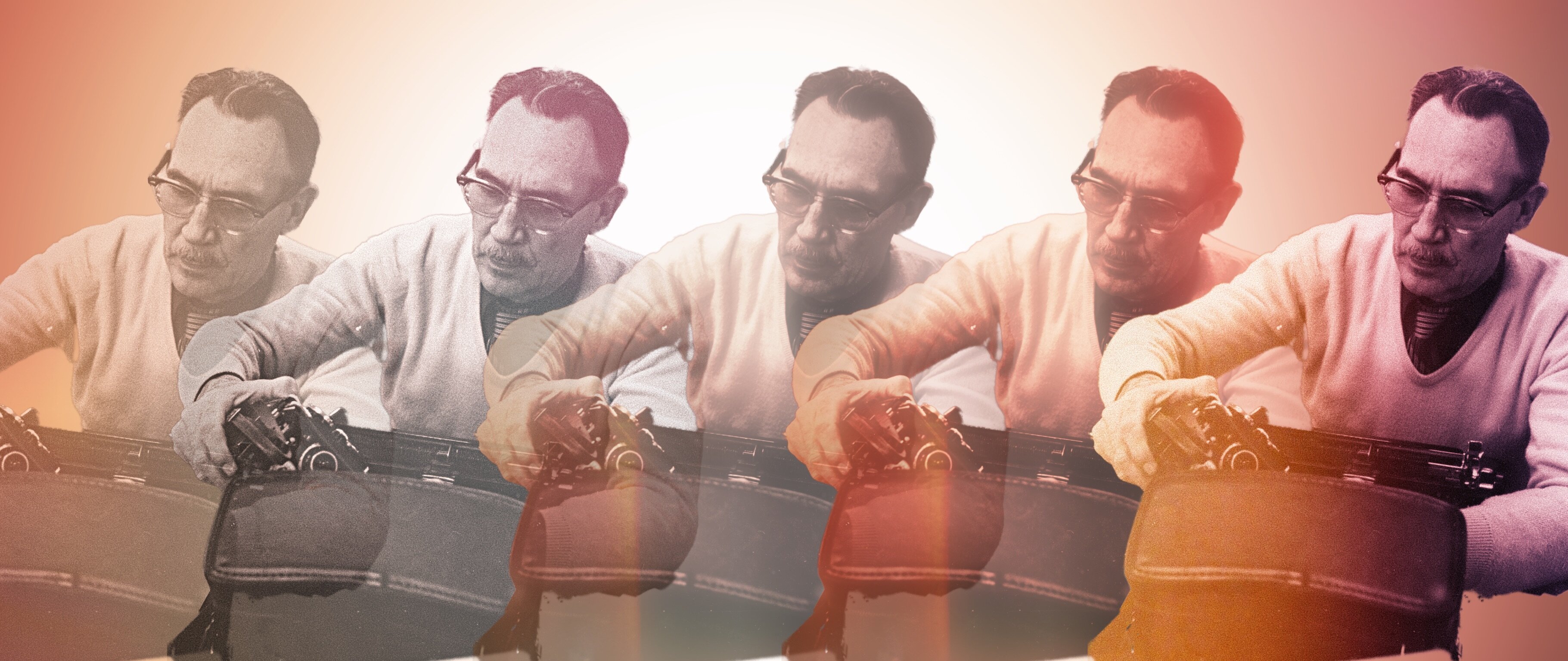
My father died 21,550 days ago, and I still don’t really have him figured out.
If you do the arithmetic and remember leap year days, you’ll find that it works out to 59 years.
It was a gray day, May 13, 1967 was, at least in central Missouri. I had gone fossil hunting with a group of friends, mostly adults. I’d never done that before and I never did it again, and just today it occurred to me that maybe it was arranged so that my mom could be at Boone County Hospital with my dying dad. I think my two sisters, one a year younger than me, the other four years younger, had been farmed out to various activities, too.
Getting home from fossil hunting, I encountered an empty house with an Episcopal priest standing on the front porch. I’ll not name him because I hope that my memories of him are unfair. He’s probably dead, anyway.
We were Episcopalians; it was still the era when anybody who was anybody was a member of the Episcopal Church. When I was baptized at Grace Episcopal Church in Jefferson City, my godfather was John G. “Doc” Christy, soon to be mayor there, and the congregation included a lot of political figures in Missouri. My family soon moved 30 miles north to Columbia. Church was a big part of our life. Church politics was also a big part of our life. And in the spring of 1967 the politics of Calvary Episcopal Church were, as my old friend Pat would object to my putting it, fraught.
We had a new priest. Many of us (I say from the memory of a child) liked the old priest. When he was reassigned to St. Louis and he and his family were soon to move away, I even wrote a letter to Bishop George Cadigan in St. Louis advising him of his error. I felt I could take this liberty in that the bishop and I were old pals — after all, he had confirmed me. He wrote me a nice letter in response, but my plea did no good.
I did not and do not know the reason for the change of priests. There are always whispers and gossip; it may be a requirement specified in the Book of Common Prayer, the original of which was compiled by people about whom whispers and gossip could lead to beheadings and often did.
The Episcopal Church is a derivative of the Church of England. I have a thick British book of limericks, and at least half of them are about mischief involving the Vicar. Episcopal priests were famous for offering excessive aid and comfort to the parish wives. Let me say that I haven’t the slightest evidence that this figured in to events at my parish. (And nowadays the reputation has shifted somewhat: the priest might well be messing around with women of the parish, but the priest is now probably a woman, too.)
The storm was still rumbling when a new priest was hired, and part of the deal was that he and his family would be provided with a new $57,000 house! At that time, several bouts of national economic mismanagement ago, $57,000 would buy a hell of a house. In due course the deal was closed, but a bad taste remained.
And now, on the afternoon of May 13, 1967, this new and distant priest was standing on the front steps. He greeted me matter-of-factly: “You know, your daddy died today.” There is nothing seared more indelibly in my memory than that sentence and its tone of voice. I was thereafter pretty much done with the Episcopal Church.
It could have been worse. It could have been entirely unexpected, and would have been had I not accidentally learned three days earlier that my father’s cancer “had come back” as it was phrased. So I’d had from Wednesday to Saturday to come to grips with it. My surprise was that he had died so quickly.
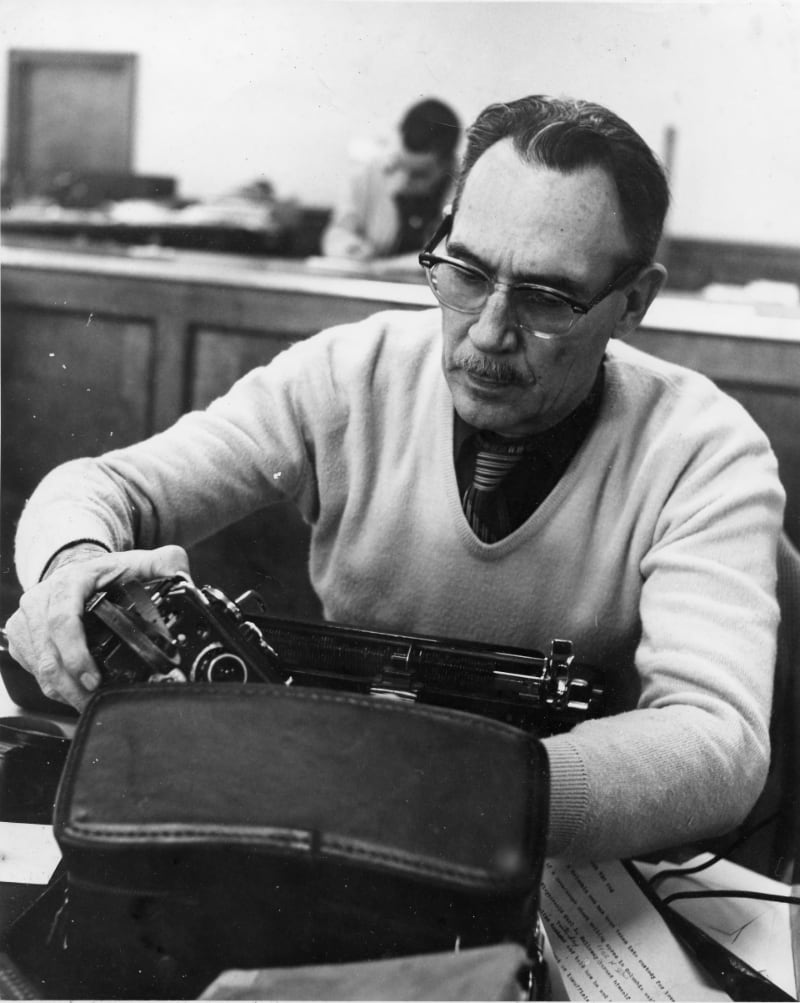
I had skipped school that Thursday and Friday and instead hung out at the photo department of the newspaper where my dad was a reporter. No one asked me why I was there. I immersed myself in news photography, thereby developing a habit that persists.
It was thought that my father didn’t know he had terminal cancer, and at the time I accepted it. Over the years I have come to realize that it wasn’t true. That winter I had come down with a flavor of viral pneumonia that required me to stay home from school weeks after I felt just fine. My dad had had back surgery and was bedridden.
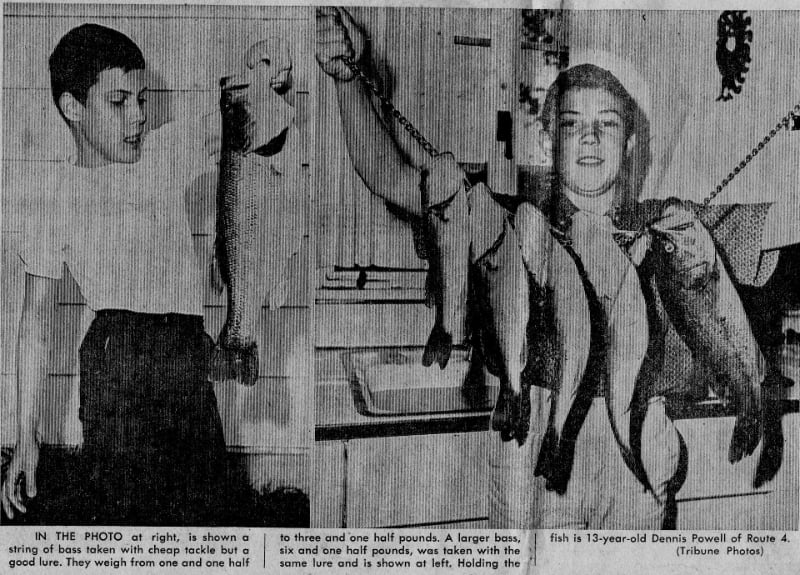
I spent those weeks talking with him. We talked mostly about fishing. His duties at the paper included a very popular outdoors column, twice during the week and a picture page on Sunday. I often went along on those assignments. So neither my developing a passion for fishing nor his approving of it was unexpected. We were not rolling in money, but one Saturday morning my mom drove me to Westlake hardware store, on Broadway, where a Garcia Mitchell 309 spinning reel (I’m left-handed) and appropriate rod were acquired for me. (It was an “ultra-light” rig, but I figured our pond didn’t have huge fish anyway.) Thereafter, I spent an hour or so a day catching bass and bluegill and the occasional painfully spiny yellow perch.
My dad also became close friends with my maternal grandfather, who with my grandmother lived next door. They had not always gotten along.
I remember one evening when, in an unusually serious voice, he asked me to sit by his bed. This suggested bad news. But what he said was not what I expected. Instead, he told me how his own father had long ago suffered a stroke and had been unconscious in bed for weeks. Then, one night, “he turned his head, looked at me, and smiled,” and then died. “So I know that miracles are real. I have seen it.”
That was it. That was the whole story. I didn’t make much of it at the time, because I was a kid and not an especially observant one. Its meaning has grown over the last almost 60 years.
A few weeks later my father died. There was an endless stream of visitors — Grandpa referred to them as “the parade of inlaws and outlaws.” The funeral was two days later, as was customary. The exiled priest returned to town to conduct the service. I’d suggested that my dad would probably prefer to be buried in his Indiana hometown, and my mother agreed. His people were there, a couple of lovely old maid cousins and another cousin, the always smiling Bob Cummings, who was a civic leader and editor and publisher of the local newspaper. The bridge across the Ohio River there would one day be built and named after Bob.
My first cousin, Robert Leach, himself a preacher (Christian Church, Disciples of Christ, for those keeping score), went along with us on the trip to the Indiana town a couple hundred miles down the Ohio from where I am writing this. After the burial, as cottonwood fluff floated around, we joked and laughed and threw a very cool red saucer thing that was better than a Frisbee, purchased at the Cannelton, Indiana, Ben Franklin store. He should have written a book for clergy on dealing with kids who had lost a parent. I knew of at least one clergyman who could have used such knowledge, and Robert was very good at it.
My father was not a mild man. He was short-tempered, secretive, and demanding. He was, I have come to learn, a vain man. Indeed, most of what I know about him is stuff I learned after he died. For instance, he had been married twice before. I never met my half-sister, called “Jackie-Pat,” who died in 2018. (I located her in California in the early 1990s, but before I got in touch I was talked out of it by friends who said she probably wouldn’t want to hear from me.) I did, once, meet my adopted half brother, whose existence explained something that had puzzled me: my dad wrote a book that gained some attention in the late 1940s. It was dedicated to “My son, David.” Growing up, I had wondered why my father had misspelled my name and indeed how he had predicted my coming to pass. It was something one learned not to ask about. The dedication went on to say that he hoped this David would grow up in a world free of the likes of Harry Truman.
He was a rabid Republican, yet after he died it was A. Basey Vanlandingham, a Democrat Missouri state senator, who introduced a resolution mourning his death.
So many mysteries, some that I still seek to solve. There are so many pictures he made — he was a fine news photographer — that I cannot identify, but will keep at it. (Looking at my news pictures, I see that I’m guilty of the same omission.) I can say that questions one has when a parent dies do not diminish over the years.
Until they’re all sorted out, I can content myself that the last thing he wrote, dictated into a little tape recorder I’d gotten for Christmas, was his final outdoor column. It appeared six days before he died. It was about how his son had been catching big fish in our pond with his new rod and reel. 
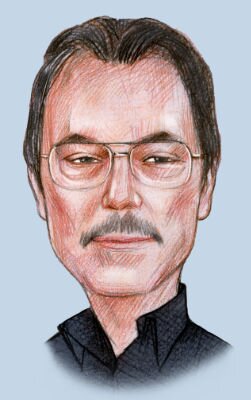
Dennis E. Powell is crackpot-at-large at Open for Business. Powell was a reporter in New York and elsewhere before moving to Ohio, where he has (mostly) recovered.
Pass along this article.
Never Miss Another Article from Dennis E. Powell.
You need to be logged in if you wish to comment on this article. Sign in or sign up here.

Start the Conversation