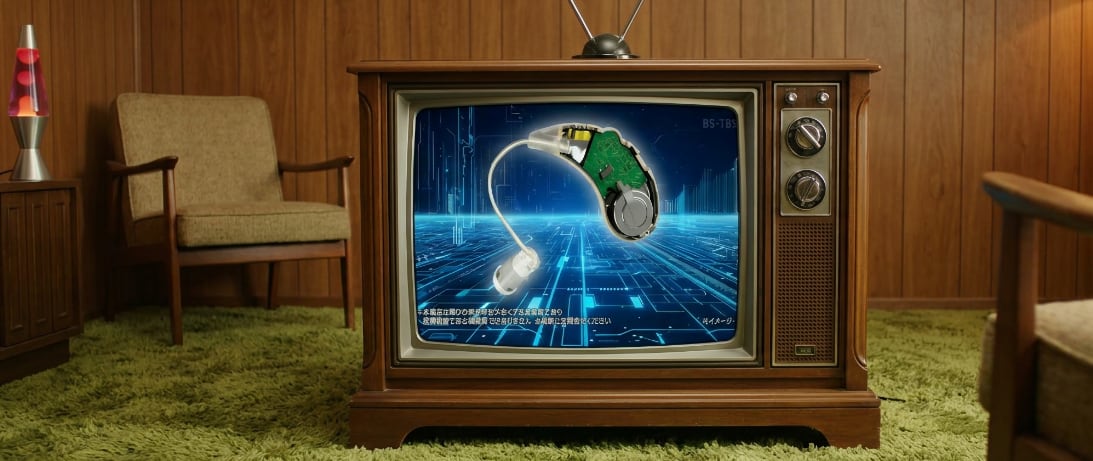
Over the last few years, as frequent readers here know, I’ve taken interest in the lovely, even cute, Japanese culture.
That country conducts itself differently than other cultures do. It is fascinating and usually relaxing. It is also sometimes puzzling, even borderline inexplicable.
My introduction to Japanese ways, beyond reading of 20th-century history, came when I discovered anime during the COVID-19 pandemic. My interest grew when on July 7, 2022 (July 8 there — we’re 13 hours apart during the summer) the former prime minister, Abe Shinzo, was shot and killed by a young man angry because the former Unification Church — the Moonies — had shaken down his mother and bankrupted his family. The fellow, now serving a long prison term, thought that Abe was somehow tied to the church — which we’d later learn was not an unreasonable supposition.
It was that night that I learned that I could watch Japan’s English-language equivalent to PBS, NHK. News coverage there, I learned, was governed by official pronouncements: Though it was reporting that Abe hadn’t breathed and his heart hadn’t been beating for two hours, NHK was unwilling to make the leap that the former prime minister might be dead.
I continued to watch the station and have come to enjoy it, even though its politics tend to be nutty (another similarity with PBS, and given current U.S. politics there’s little room to criticize).
When a couple of years ago I built my own televisions and discovered the thousands of streaming channels available for free, I found that there were other Japanese stations (and a dozen channels devoted to anime!). As is the nature of much streaming television, the channels come and go. I discovered, for instance, Nippon TV, which had colorful programs, some of which are somewhat understandable to those of us who speak no Japanese. The newscasts are interesting, in part because of the animated crime-scene recreations as well as the occasional English word. There were baseball games and golf tournaments, neither of which requires narration.
My Japanese friend and cultural guide Risa told me that she had given away her television because Japanese television is so bad. She was right, though to Western eyes it can be amusingly, delightfully bad. (As I wrote this, CNN cited Bill Nye as a scientific authority, so as with our politics American television is nothing to brag about.)
For some unknown reason I no longer can receive Nippon TV. But as streaming taketh away, so also streaming giveth: I can now watch BS TBS, which I couldn’t before. It is a station made up largely of infomercials which seem aimed primarily at old people. It also has mysteries that resemble American mystery shows, and what seems to be a soap opera involving a family that has some sort of small restaurant. The patriarch is an older fellow with a gray, flat-top haircut. There is also a cute and assertive little girl, with other family members, friends, and so on. Like American soap operas — the few that remain — it is dialogue-driven and therefore impossible for me to understand.
But it’s nice to have on when, for instance, I’m taking a nap. It’s soothing. And I keep hoping — it keeps not working — that if I have Japanese on in the background, sooner or later I’ll begin to understand it.
The strangest thing about BS TBS is its baseball broadcasts.
Those of us who are baseball purists must respect Japanese baseball, because it is played using the rules of baseball, not the monkey show marketed by the American outfit known as MLB. Baseball’s best pitcher right now is Ohtani Shohei, who plays for the Los Angeles Dodgers. So watching Japanese baseball is tempting.
A couple of weeks ago I watched a game on BS TBS. The home team was the DeNA BayStars from Yokohama, who won.
The post-game ritual was charming. The team mascot came out and danced (earlier, the cute cheerleaders held a relay race during the actual game, between innings). The team came out and bowed to the crowd.
It is worth mention that the DeNA BayStars have a perfectly Japanese ticket policy: If the team loses, or if you thought they played dishåonorably, you may request and receive a refund of the ticket price. (This is cooler, even, than my local team, the Southern Ohio Copperheads, whose players will to earn money come round and mow your lawn or wash your car.)
After the team had shown its respect to the fans, the heroes of that day’s game lined up for interviews. This was remarkable in two ways: The first is that each hero is presented with and must hold during the interview a stuffed animal. I do not know why, or if they get to keep them, or if they vary from game to game — “Collect the entire set! And be sure to watch Japan’s best players as they meet for the annual Plushies Game!” The second was the presence of American players and players from other non-Japan countries. It was a little startling to see Cooper Hummel, former player for American teams, having questions translated for him, giving his answers in English, and then hearing them translated back to Japanese. (The answers are exactly the same as they are here, “I’m just glad to be part of the team.” “We’re just playing one game at a time.”)
The game play itself is a bit different. Americans are accustomed to outfielders arriving where the ball will come down well before it gets there. I haven’t seen a Japanese player catch a fly ball at less than a dead run, and the outcome is always in doubt — it is not unusual to see a player splatter into the outfield wall and miss what should have been an easy catch. Likewise, infielders seem disinclined to throw the ball quickly. They tend to hold it an extra beat, as if pondering whether to make that play at first base or not. Which, more often than you’d expect, they fail to do in time.
If a player is or might be injured, the proceedings come to a halt until he is accompanied back into the dugout, then disappears into a back room for from one to five minutes. He then comes back out and returns to his position on the field.
There is a BayStars pitcher — I didn’t catch his name — who has the most unusual delivery I’ve ever seen. The ball leaves his hand at about his knee level. This would have been more worthy of note had the BayStars not been behind 7-4 when he was replaced.
I cannot know whether he gave up all those runs, because the game was joined in-progress, in the fourth inning, following a volleyball tournament. That was regrettable but I suppose understandable.
What was not understandable was how the station left the game in the seventh inning, immediately after a BayStar had hit a long fly but before it came down, to jump to an infomercial. We never heard of the baseball game again.
Instead, we learned about treatments for a condition that apparently results in colorful lightning shooting from people’s knees and butts. It was followed by a woman, dressed in green from bell-bottom pants to leafy green afro, who was offering treatment for a bowel disorder that resulted in green circles present in one’s purple intestines.
I thought this might have been an anomaly, a mistake. But no, the next day, during another game against the Tokyo Giants, the BayStars were interrupted so that we could learn of a man who it seems used to make funny faces on Japanese television. He was quite old, 94 I think. In Japanese commercials involving lightning emitted by the body and old people who can now proudly walk (or, it turns out, drink), the age of the person depicted is often given. Had he died and this was a report on his life? No. He and his old, tiny wife, who were during the course of several minutes shown looking through an album of what appeared to be expired credit cards, eating, and at the gym lifting weights and doing chin-ups, owe it all to an almost fluorescent bright green powder in small packets. It is mixed with water and consumed.
They pronounced it “oishii,” which is Japanese for “delicious.”
The product was Super Botanical Drink. Over the next hour I was treated to a series of small documentaries about various people: A singer, now very old but still performing professionally, a baker, now very old but still baking, along with his daughter, and a classy bar run by a bartender, now very old but still mixing drinks. And at the end of each, the subject of the profile would mix up some Super Botanical Drink, chug it down, and declare it oishii. (The bartender even mixed it with whisky for customers. I do not know Japanese, so I would not have caught it if they had said, “What the hell is this??” but in the end they found it oishii, too.
After which came a lengthy demonstration of a hearing aid, so large that its kind was last seen on Western television in the days before TV programs were available in color. Even so, it made life better for everyone who used it, though you do not eat hearing aids so it couldn’t have been described as oishii. Well, I guess it could have, but no one did.
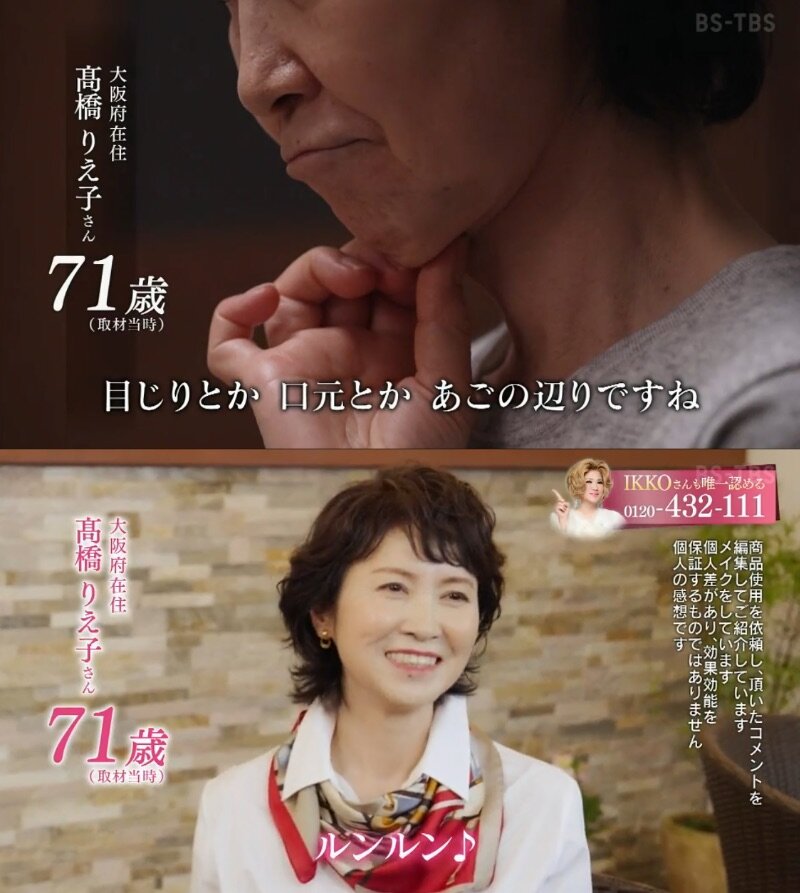
And “Ikko Cola-Rich,” a cream that transforms even the most wrinkled of crones into a debutante. Creams and supplements are apparently popular in Japan. Sometimes the ads are shown as a panel of an average woman, and old man, and an overweight, older woman watch and from time to time clap. These products receive applause when the price is announced. They receive more clapping when that price is crossed out and a lower price is revealed. They clap and clap when it is shown that this lower price will get you two of whatever is being sold. There’s a pattern to it.
I’ve looked but have not seen a memory eliminator, that makes you forget that you tuned in to watch a baseball game.
It’s amusing in its way, but I can see how someone in Japan would agree that Risa was right. Japanese television is bad. 

Dennis E. Powell is crackpot-at-large at Open for Business. Powell was a reporter in New York and elsewhere before moving to Ohio, where he has (mostly) recovered.
Pass along this article.
Never Miss Another Article from Dennis E. Powell.
You need to be logged in if you wish to comment on this article. Sign in or sign up here.


Start the Conversation