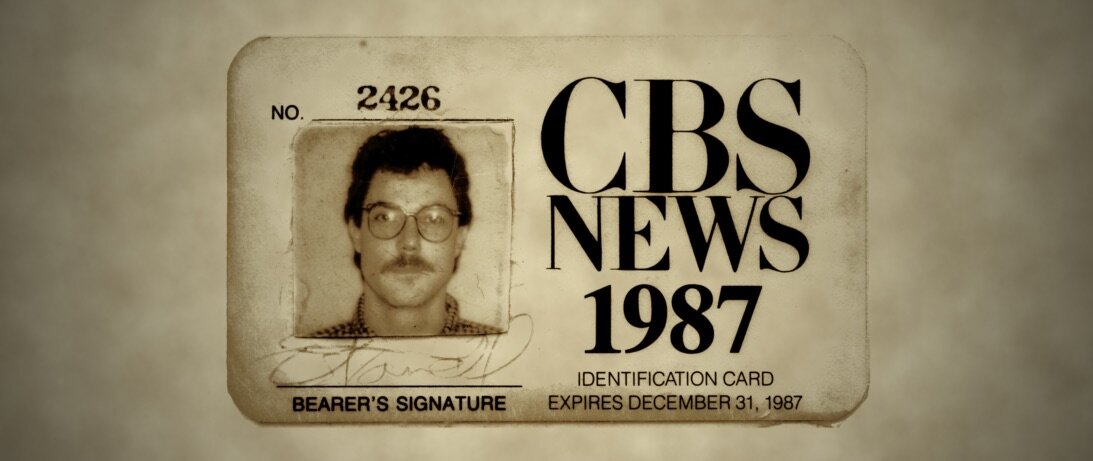
The mood in the CBS Radio Networks newsroom was grim, depressing, and tense.
There had recently been buyouts, with longtime employees being offered cash and benefits to . . . leave. Many, including longtime employees who didn’t accept the buyouts (or ones who for some reason weren’t offered them), were laid off, never to return.
The whole place had recently come under new management, and when that happens the results are never good, as everyone knew.
There in the CBS Broadcast Center at 524 West 57th Street there was more than rumor that the place might be sold or, unthinkably, shut down.
The Broadcast Center building used to be a dairy. Deep in the bowels of the building, it was said, the railroad tracks that used to carry away the tank cars of milk still existed. The first floor was devoted to news-related endeavors, both radio and television. On the second floor were studios where soap operas were made. In the basement there was the canteen. It was called the “Station Break.” I know this because I predicted it, when a little contest the company had to name it was announced. There was nothing imaginative or clever about it. Network cafeterias are always called the Station Break.
When people thought of a CBS building, which people used to do, they thought of “Black Rock,” the sexy Eero Saarinen CBS Building at 51 West 52nd Street, not some recycled agricultural structure on the West Side a block from the Hudson River. But with the exception of WCBS — “local,” it was called within the company — CBS broadcasts came from the Broadcast Center, not Black Rock.
And now it was in turmoil.
All of the above could have been said at just about any time between 1985 and last week.
Last week, the current new management made the worst of all those bad dreams come true. They announced that on May 22, the CBS Radio Network will disappear.
Forty years ago, the CBS terror had to do with the new broadcasting boss Larry Tisch. Everyone was afraid that he would notice and act upon the tremendous waste there. For example, newswriters could not edit their own tape, as was the standard numerous other places. At the network where I worked before going to CBS, the late and unlamented RKO, you’d cut your own sound, which beside being more practically efficient also saved an entire salary. At CBS you had to explain to a member of the engineers union, disparagingly called a “tech,” where you wanted the sound bite to begin and where you wanted it to end, and heaven help you if there were any internal edits. The union rules were fierce — the world could be coming to and end and if the “tech” decided it was his break time you were out of luck.
Additionally, the unctious “religious” broadcaster Pat Robertson was campaigning to purchase CBS in whole or part. This struck fear in the hearts of the coastal liberals at the network. (Which bias would be stunningly demonstrated by the downfall of CBS Evening News anchor Dan Rather in 2004.) The company, which had indulged in a buying spree, now had to pay for it. Ted Turner, founder of CNN, was making noises as if he were thinking of buying the place. There were buyouts and layoffs and a newswriters strike. It was not a happy time.
It’s even sadder there now, I’m told. David Ellison and new news head Bari Weiss have decided the company was better off abandoning radio, so that’s what they’re doing.
Though it’s not as if it’s a surprise.
In the late 1980s, the ramshackle but weirdly lovable radio newsroom was replaced by a dimly lit room with all kinds of custom-built desks and, on one wall, the gigantic world map that had a generation earlier been the backdrop for the evening news when Walter Cronkite was the anchor. The move chipped away at the soul of the place, though my desk was located at the place in the room where Walter Cronkite sat when he had tearfully announced the death of President Kennedy. You can see a portion of the map at upper left in the archive. (The clip is worth viewing as an illustration of how news was once covered seriously. Also, how newsmen of the day were familiar with the news and the people who made it, such that they could ad lib at length.)
The company sold off its “o&o” — owned and operated — stations, as have most broadcasters. In the case of CBS, that was underway 40 years ago and was completed 30 years later. In 1995, CBS was sold to Westinghouse who, like many companies, had owned a string of broadcast stations. By then, the once powerful radio networks were being parted out like a rusty old car. Some, such as NBC, disappeared entirely. Now CBS is going and while it wasn’t an especially great place to work much of the time, it was a monument to greatness.
I remember Cronkite occasionally stopping by. The great Douglas Edwards, Cronkite’s television news predecessor, had prestigious daily newscasts when I was there. He dressed impeccably — to be on the radio. I saw Charles Osgood daily — he worked maybe 10 feet from me. One of the best reporters I have known was Bill Lynch, who as a White House reporter had gotten Ronald Reagan to record an answering machine message for him. He couldn’t use it, though, because when he tried, people kept calling to hear the message, then hanging up. Chris Glenn, who looked like Leonard Nimoy, did afternoons and later the long 6 p.m. newscast. They’re all dead now, and the world is a lesser place for it. I am grateful to have had the opportunity to know them a little.
They were representatives, in many cases founders, of the phenomenon in which ordinary people knew the names of newscast anchors, both radio and television. Everyone knew the names of Cronkite, Huntley and Brinkley, and Howard K. Smith. The main ABC morning radio newscast was “News Around the World,” anchored by Don Gardiner. Can you name a single over-the-air news broadcaster today? I can’t, even including the network television anchors.
As with some New York-based media — The New York Times and The New Yorker come to mind, as well as WOR-AM radio until the early 1980s — there was once a culture specific to CBS. For instance, at CBS you would get scolded for referring to a newscast as a “show.” There was a reverence toward the place.
It’s pretty much gone now, and what isn’t gone is going. Local radio has in most places been taken over by satellite-provided automated music programming. The now-useless FCC’s requirement that licencees devote a percentage of time to news and public affairs is gone. Radio itself is pretty much dying, replaced by the internet even in automobiles. I think it is a tragedy, as do those who turn to the radio for information during actual tragedies. All, really, that’s left is what’s left of ABC.
Newspapers are dead or dying. Television, too, in the traditional sense.
Radio is going, and in the case of the CBS Radio Network, soon to be gone.
We figured 40 years ago it would happen. Now it has.
I think — perhaps even desperately hope — that we’ll regret it. 

Dennis E. Powell is crackpot-at-large at Open for Business. Powell was a reporter in New York and elsewhere before moving to Ohio, where he has (mostly) recovered.
Pass along this article.
Never Miss Another Article from Dennis E. Powell.
You need to be logged in if you wish to comment on this article. Sign in or sign up here.

Start the Conversation