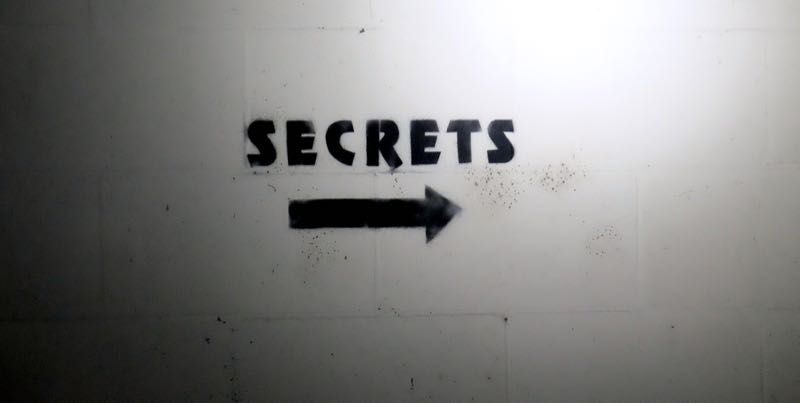
You might have heard of an article published by Reuters late last week in which after extensive research and what I guess they’d call shoe-leather detective work they identified the famous British stencil-graffiti artist known as “Banksy.”
It remains to be seen if this expenditure of time, energy, and no doubt considerable money accomplished anything other than irritating “Banksy,” who had gone to some pains to remain anonymous. Doing art and art-ish things (such as, oh, I don’t know, writing) anonymously or under assumed names is a long tradition. It has been if not respected at least endured, mostly, at least while it still mattered.
It’s a topic for interesting discussion, I suppose, though I doubt it will lead to a satisfying conclusion.
The Reuters investigation reminded me of a nearly identical phenomenon that happened locally a decade ago this month. (Thanks for the timing, Reuters!)
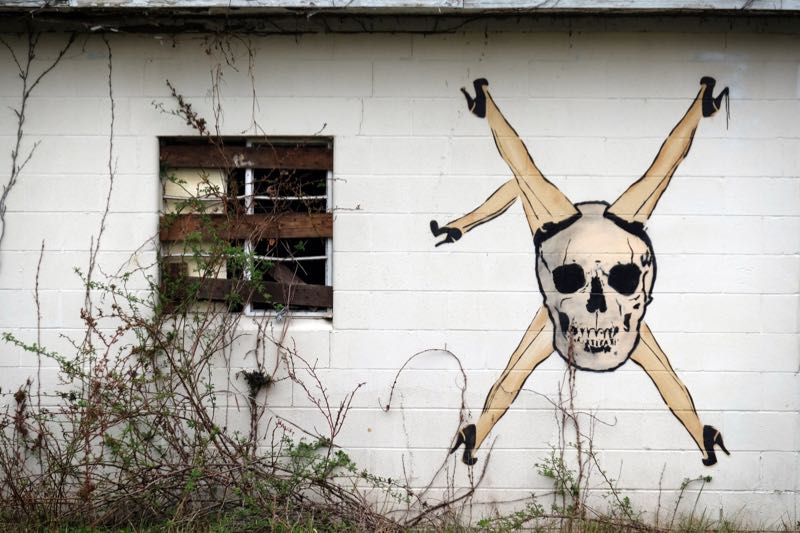
He was known as the “Real Detective,” occasionally the “Rail Detective,” and he decorated places around here with stencil graffiti depicting a variety of subjects, though most of them were drawn, so to speak, from the kind of thing you’d see on the covers of magazines found in postwar barbershops. Busty, imperiled women, that kind of thing.
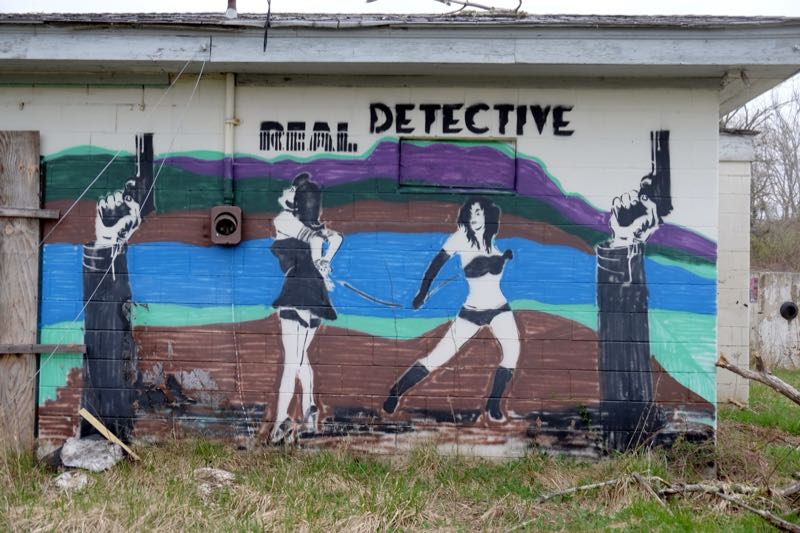
No one knew who he was. Well, that’s overstating it; he knew who he was and maybe some others did, too, but if they did they weren’t saying. It was a nice little mystery, the kind of thing that would get discussed in places like, well, barbershops. (And newspaper offices, which in my case took on the tone of the newspaper office in one of the “Spiderman” movies when the subject arose.) Figuring out who the “Real Detective” was appeared on the to-do lists of both my editor and me. “Aha!” I imagined myself saying upon learning his identity. And, were it a good story, his explaining why revealing who he was would have spoiled . . . everything.
The artist/vandal’s work appeared in a variety of places where graffiti is typically found — alley walls, the outsides of vacant buildings, imaginative places, too. A large picture of an oncoming locomotive showed up in an old railroad tunnel that was often visited by Ohio University students and former students. That one was labeled “Rail Detective.” A few appeared around town. The cops said that no one had complained and the chief said that his understanding was that the perpetrator got permission from the property owners ahead of time.
But who was he?
As is so often the case, whose who were talking didn’t know and those who knew weren’t talking. Nor, to be honest, was it the most pressing story in town, so we didn’t undertake a Reuters-style, who-is-Banksy investigation. But it was always there and always it nagged.
The afternoon of March 28, 2016 I got a note from my editor, Terry Smith. Local cops — actually, a consortium of police departments — had picked up someone when their investigation of an abandoned car had led them to a fellow at a place that reeked of cannabis plants. They found a marijuana-growing operation and evidence that the person they had arrested was the “Real Detective.” He was a 51-year-old man living a few miles north of me.
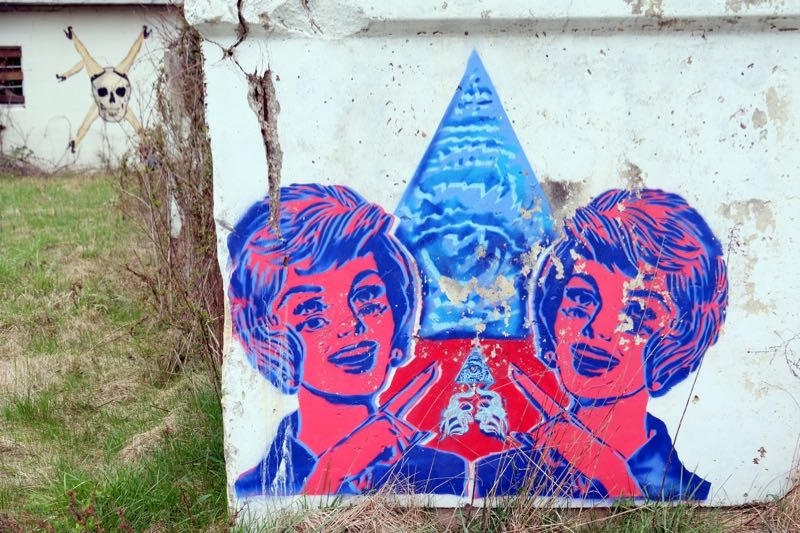
I spent until sunset looking for and photographing “Real Detective” artwork. By evening — we were a newspaper at the time, and competitive — I had online a picture show, along with a fanciful story in the captions. (You can click from picture to picture and get both pictures and captions.)
During the following weeks I spent some time trying to track down the artist, without much success. At one point I got a phone number and, when I called, a person who likely was the fellow. I wanted to interview him and he said that he’d be happy to let me do a picture feature about the art of making stencils, but it never came to pass.
Early the following year the fellow who was arrested copped a plea to reduced charges. (It should be remembered that he was never charged with anything related to his graffiti.)
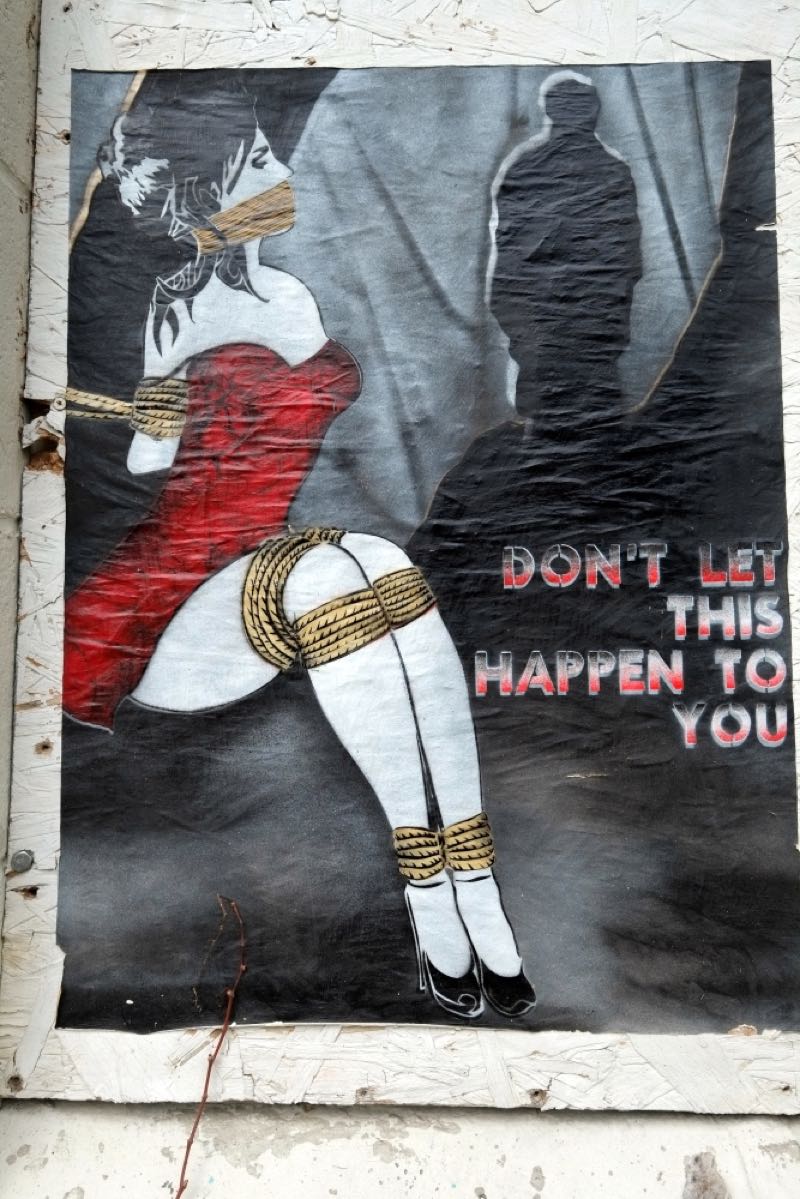
But the bubble couldn’t be unpopped. I haven’t looked, but I haven’t seen or heard anything more of the “Real Detective.” I suspect — we saw some of this in the Reuters story of “Banksy,” too — that anonymity is a big part of it, that it is in that respect performance art. And that’s easy to understand: The idea of someone who swoops in and leaves a skillfully executed artistic commentary and disappears is entirely different from a guy whose name is known, whom you could tell, if you wanted, to knock it off. His unmasking was the equivalent of the person who shouts the punchline before the joke is completely told, or the person who tells you how a movie you want to see turns out.
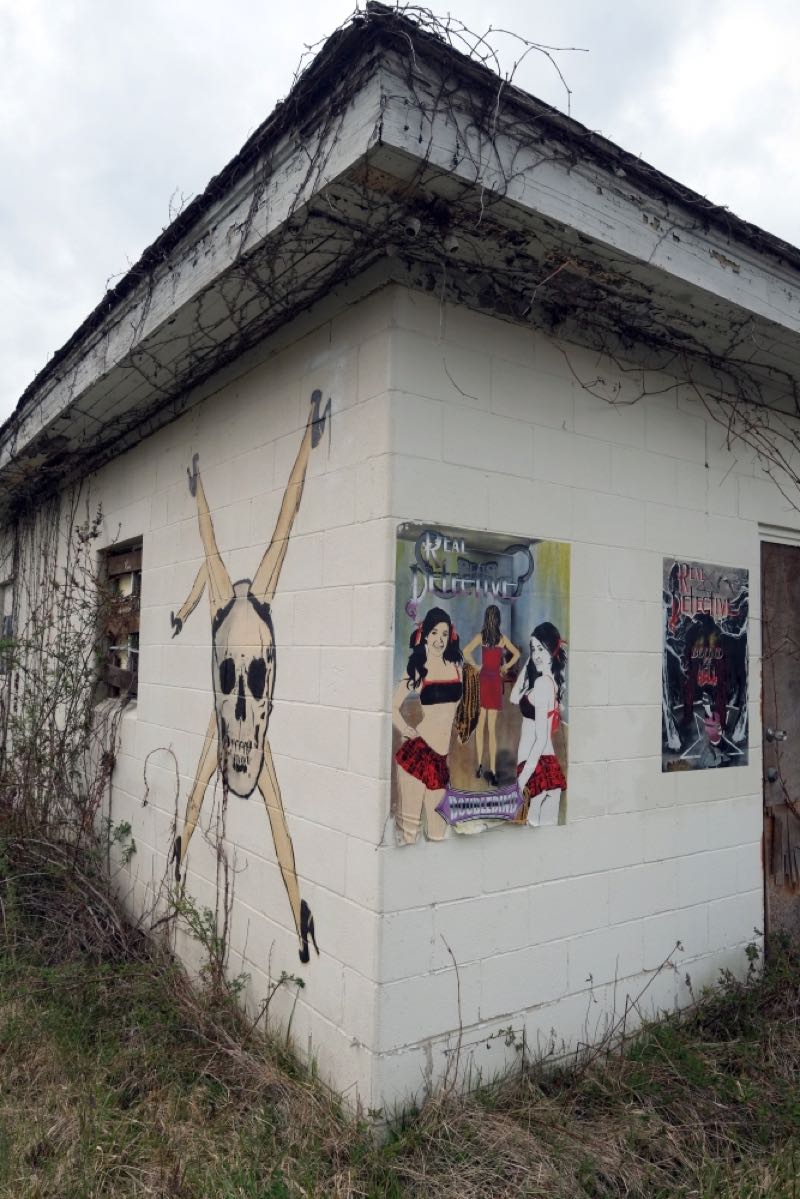
His name is out there; you can find it if you want to, but you might notice I haven’t mentioned it here, nor the real name of the “Banksy” artist. I have discovered that I favor privacy when there’s no compelling reason to violate it.
I this case, it’s like hitting the art with a can of spray paint.
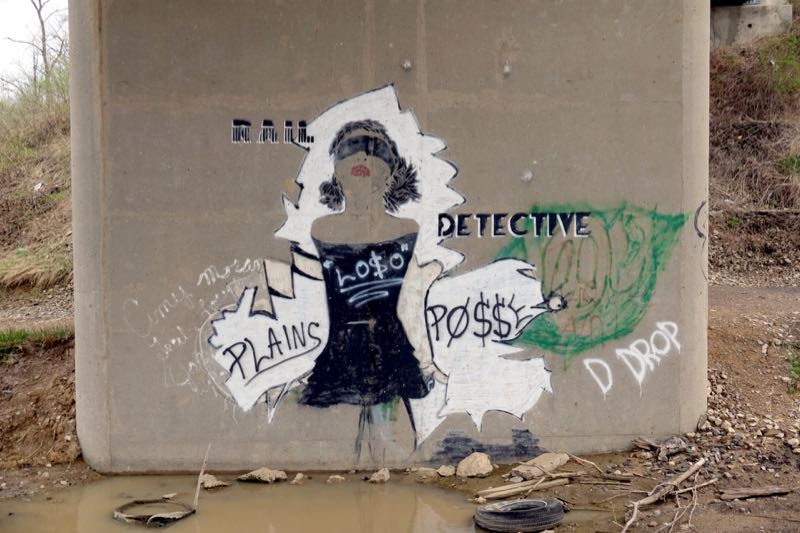
Reportorially, I now realize — didn’t much think about it at the time — I’m glad that someone else found out who he was (and to be honest, I wonder why the police thought it was a good idea to mention his artistic activities in a news release announcing allegations that had nothing to do with his graffiti).
Sometimes, maybe, secrets ought to be kept.
You can take that to the “Banksy.” 
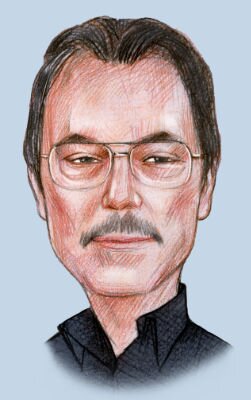
Dennis E. Powell is crackpot-at-large at Open for Business. Powell was a reporter in New York and elsewhere before moving to Ohio, where he has (mostly) recovered.
Pass along this article.
Never Miss Another Article from Dennis E. Powell.
You need to be logged in if you wish to comment on this article. Sign in or sign up here.

Start the Conversation