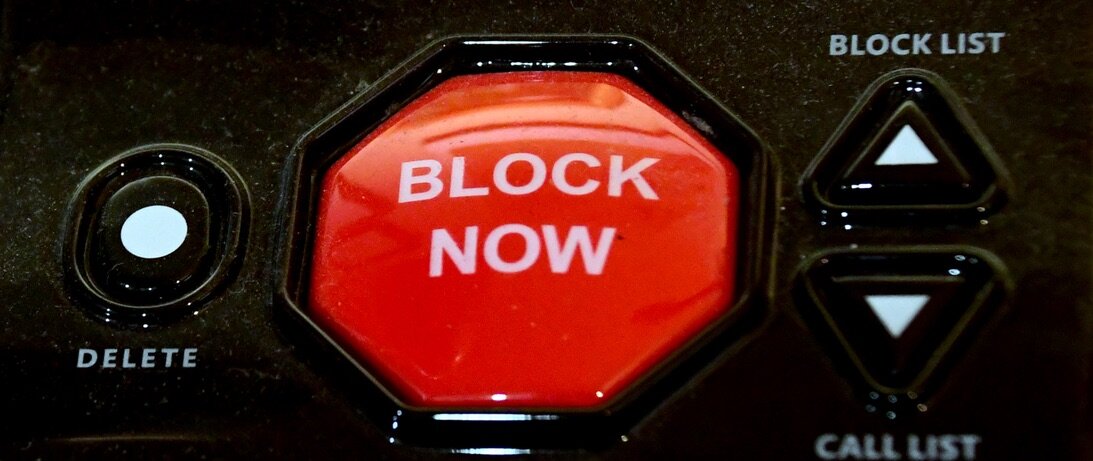
Alas, it has begun anew. It will get worse and there’s reason to believe that this time it will be more irritating than ever before.
Yesterday I received a phone call from Jon Husted. Well, no, not really, so let me rephrase it. Yesterday I received a phone call from a recording claiming to be of the voice of Jon Husted. As with just about every phone call I receive nowadays, I let it go directly to the answering machine.
Over the years, when he was Ohio secretary of state, I occasionally covered Husted. He’s a Republican, as am I, and he never said anything in the speeches I covered with which I much disagreed. He was pleasant to speak with, but politicians are like that so it means little or nothing.
He is currently the junior U.S. senator from Ohio, having replaced — an improvement, I think — J.D. Vance. He is up for election to a full term.
I got around to listening to the recording a minute ago. It said it was an invitation to some sort of telephone meeting or something that, the recording said, was underway at that very minute. It said I could always get in touch with him at his website, which has a senate.gov URL, or call his Columbus office.
Nothing much objectionable there, and as I said he’s a likable guy, and best I can tell his voting record is pretty good. I have not delved deeply into it. In that his opponent in November is likely to be former Senator Sherrod Brown, I will probably vote for him.
All of which is immaterial to the subject at hand, which is that during an election year I have an additional reason never to answer the phone. The telephone has become like search engines: something once useful that is now so horribly corrupted by advertisements and crooks and advertisements for crooks that it is scarcely worth the trouble anymore.
During an election year it is worse, because that’s when the phone message advertisements for crooks overlap — I’d love to see the Venn diagram of it — with advertisements for politicians seeking office. I suppose Husted gets credit for being the first this year, even though much will happen between now and November to determine whether he is deserving of my vote. This primarily has to do with the frequency and enthusiasm with which he kisses Donald Trump’s wrinkled old hiney, and whether he embraces sense when it comes, as each day grows more likely, to sending Trump to a nicely padded room in Springfield, Missouri.
There are likely to be several issues in the next months where voting against Trump would demonstrate a virtuous independence, which would gain my support. It would suggest that Husted is a Republican, as Trump certainly isn’t. I have never voted for a Democrat, except in a few local races where the candidate was a personal friend and the outcome wasn’t in doubt anyway. I have never knowingly voted for a Trumpian, nor shall I. I have sometimes, as in the last presidential election, written in “NO!”
Ah, but I digress.
I will receive scores, probably hundreds, of political spam calls over the next 10 months and change. None of them will be welcome. None will be listened to if there’s a way to avoid it.
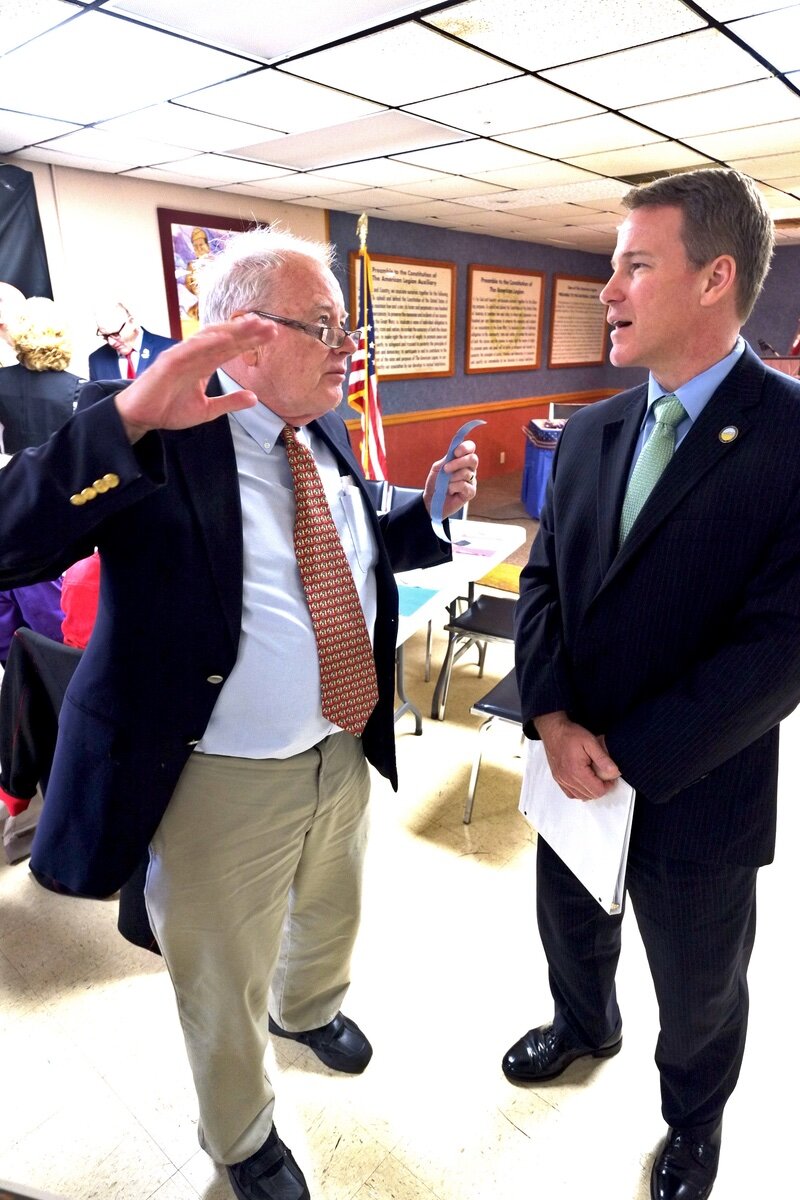
Which there is, a kind of telephonic spam filter, and I have one. There are many available — search for “call blocker” — but the one I have appealed to me because it received many (probably fake) positive reviews and because you block the calls by pressing a Big Red Button, which at some level causes one to feel as if he has sent an angry message to the unwanted caller. (“Ha! You thought you could trick me! Well, I’m on to the likes of you!”)
Which he hasn’t. All it does is hang up on the current call and make sure that no call from that number will come through again. It’s not even much of an inconvenience to the spammer. I’d pay double — no, triple — for one that sent high voltage down the line, causing the robocall machine on the other end to burst into flames. Those are not available. They are, or if offered soon would be, illegal. Remember, we’re talking about calls from politicians here, and they are the ones who make the laws, often for their own convenience. (That’s why there are no meaningful laws protecting people’s privacy: politicians are among the leading consumers of scraped data.)
It shouldn’t be necessary to plop down most of a hundred bucks to not receive annoying phone calls. There was once — it still exists, but it’s useless and in fact its own website pumps information to Google — a half-hearted attempt to establish on a national level a spam call prevention system. It is called the “National Do Not Call Registry” and the best I can tell it never prevented a single unwanted phone call; in fact, it apparently increased those calls.
The idea was that you would enter your phone number there and telemarketers, scammers, and other sketchy outfits would see it and know not to call you. Presumably someone somewhere at least for a time thought that this would work. In practice, scammers traded on the fact that people silly enough to sign up would also be silly enough to figure that because they had put their numbers on the list, all incoming calls could now be trusted. The Do Not Call list became their Do Call list. Oh, and “charities” and politicians were and are exempt.
(If lawmakers were serious about fighting phone spam, which as we’ve seen they aren’t, the legislation would establish a phone code that the recipient of unwanted calls could push. It would bill the caller an amount, say 25 cents, that would be paid toward the recipient’s phone bill. The phone companies would scream bloody murder, because they would have to keep better track of who is using their lines for junk calls and fraud. Also, the crooks do tend to pay their phone bills.)
It gets worse. This year, through the miracle of Artificial Intelligence — don’t get me started — we are very likely to see the rise of phony phone messages. The old-timey version of this, from the Donald Segretti school of counter-campaigning, was to place campaign calls purportedly for the other candidate at, say, 1 a.m. on weeknights, or to tell people they are invited to a free chicken-and-beer campaign dinner that didn’t actually exist. This made people mad and less likely to vote for the candidate who apparently placed the call. But now we have AI. Even a total dimwit can make anyone say anything. And distribute it over the phone lines to thousands of people. An advantage might be that real politicians would stop doing robocalls, so that sentient beings would come to dismiss all calls from politicians as fake. Well, more fake.
In the meantime, a message to politicians: Don’t call us, we’ll call you. I would not entrust my immortal soul to persons, no doubt well meaning, who dropped by the house unannounced carrying pamphlets, and I won’t make my vote based on answering machine messages.
And to the estimable Jon Husted: I’ll probably vote for you. Don’t make me change my mind. 
Dennis E. Powell is crackpot-at-large at Open for Business. Powell was a reporter in New York and elsewhere before moving to Ohio, where he has (mostly) recovered.
Pass along this article.
Never Miss Another Article from Dennis E. Powell.
You need to be logged in if you wish to comment on this article. Sign in or sign up here.


Start the Conversation