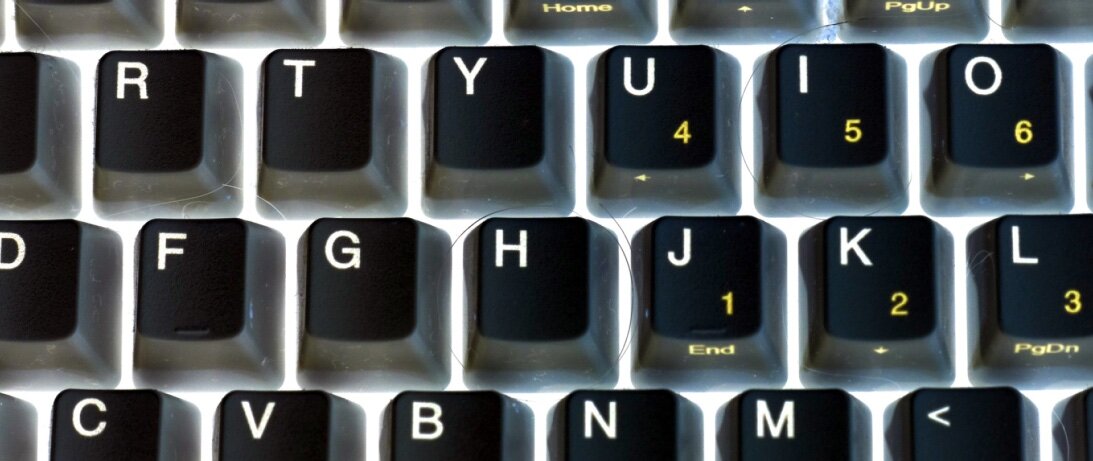
Just over a year ago I got my Unicomp Model M Mini, a newly manufactured version of what is in my estimation the best computer keyboard ever, the IBM Model M SSK. The Minis and the SSKs are like a regular IBM Model M, but they don’t have a number pad at the right, so I can put the trackball there and not have to reach for it.
I wrote a bit about it at the time. It is the only keyboard I have used since then. It has been a delight.
There was one small problem at first. The “A” key didn’t register as reliably as the other keys. This required me to grab my handy keycap puller, take off the keycap, wiggle the spring around a little, blow out the cap itself to make sure there was nothing interfering with its movement, and replace it. Not much skill was required. It took, in total, maybe 30 seconds. The problem was solved.
If I had to pick a single keyboard to use the rest of my life, it would be this one. I quickly ordered a spare — as the upstairs storage room can attest, this has been a habit of mine with keyboards over the years. In fact, some of this column was written in the first use of the spare. I wanted to compare a brand new one with one that has a year’s mileage on it There is no difference, none at all except that I hadn’t yet replaced the execrable Windows keys with more palatable blank ones.
Unicomp has raised the price of the Mini M since last year. It’s still well worth it in my estimation. (I paid for both of mine, no discount.)
As I mentioned a year ago in the column linked above, I got the Mini M in lieu of a far more expensive reproduction IBM Model F keyboard. The Model F is in theory a superior keyboard. I used originals, with original IBM PCs decades ago, and frankly they don’t especially stand out in my memory. But last week I watched a review, from a reliable guy, of one of the repro Model Fs and was again happy that I got the Unicomp instead.
The reason is that one of the pleasures of a mechanical — “clicky” — keyboard is the sound it makes. The original Model Fs, as the review linked above demonstrates, have an exquisite sound. The reproductions, if the review sample is typical, sound like a thrift-store wind-up alarm clock, with all kinds of tinny, springy sounds and other noises that don’t inspire confidence. (Though they do have their fans, the reviewer among them.) The Model Ms, old and new, sound clicky, industrial, and businesslike. The repro F’s noise would get old in a hurry, I think. I’m unlikely to confirm this. The Mini will more than do instead. Though it is easy now to see why both the original and new Model Fs offered and offer the option of a built-in solenoid device, the sole purpose of which is to produce a loud “thwack!” with every keystroke. Makes the thing sound and feel like an IBM Selectric typewriter. There was never such a thing available for the Model M. To be totally honest, if one were made I might get it. Typing on the Selectric was satisfying.
That being, really, all I have to say about my year of using the Mini M, I’d like to propose (again) an improvement to it: Black keycaps with white letters. I am not alone in wanting these.
IBM had a very good keycap design idea that in practice worked perfectly, as IBM hardware was wont to do. So, being IBM, the company abandoned it.
The original Model F and M keyboards, and before that the unsurpassed Selectric typewriters and some other IBM keyboarded products, had two-piece keycaps. The top was a cover that carried the lettering — the “legend,” as it’s called. Under the top was a slightly smaller, entirely unlabeled gray plastic piece that in turn was attached to the key’s unseen mechanical parts below.
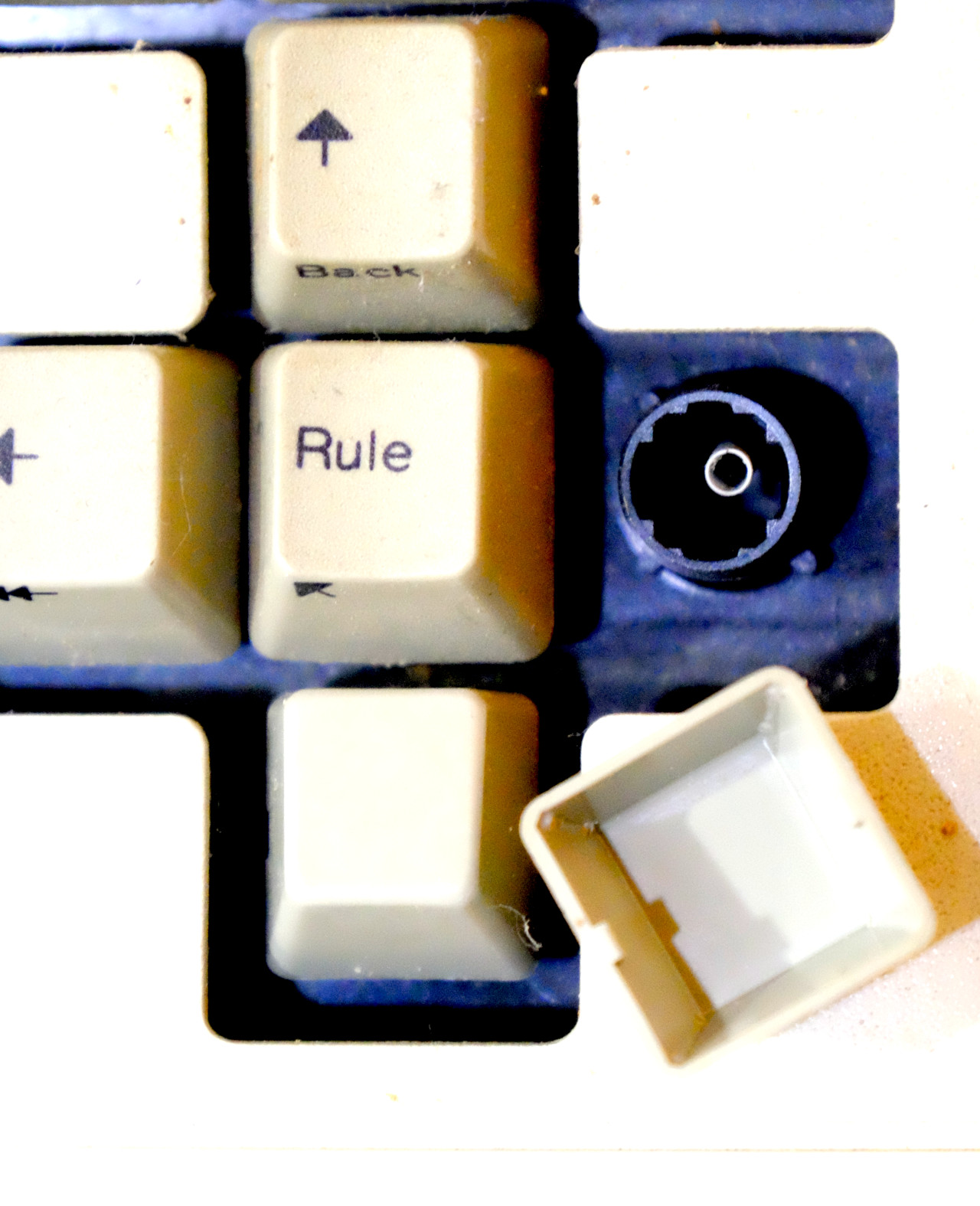
This made things easy for IBM, because the part underneath was identical across the products, no matter the language of the machine; that detail would be handled later through a variety of top parts in many languages and character sets. The tops (and the bottoms, but nobody had much need to fiddle with those), could easily be removed and replaced. The New York Times writer Adam J. Nagourney, when he was with Gannett in the 1970s, rearranged all the keycaps on his Selectric. He could touch type. Nobody else in the office could. This was effective in preventing others from using his desk and typewriter.
This practical system was replaced by the slightly cheaper one-piece keycap, where the legend was printed on the now larger bottom piece which became the only piece. IBM employed a process called dye sublimation for the legends. The legend was effectively embedded in the keycaps so that you could wear well into the cap before the lettering would disappear. IBM hardware was high-quality stuff.
In the era of clones and cheap knockoffs, most non-IBM keyboards got their legends via “pad printing,” which is simply printing the legends on top of the keycaps. It often looked nice, but you could almost scrape it off with a fingernail and even if you didn’t it would eventually wear off. That didn’t happen with IBM keyboards. (Which, at the end, were made by Unicomp, in Kentucky — still the maker of Model Ms today. Unlike other keyboards, IBM Model Fs and Model Ms sold here were made in the U.S.A. The Unicomp boards, on the “birth certificate” label on the back which states the day the keyboard was made, say “Made in Kentucky.” Which is kind of cute.)
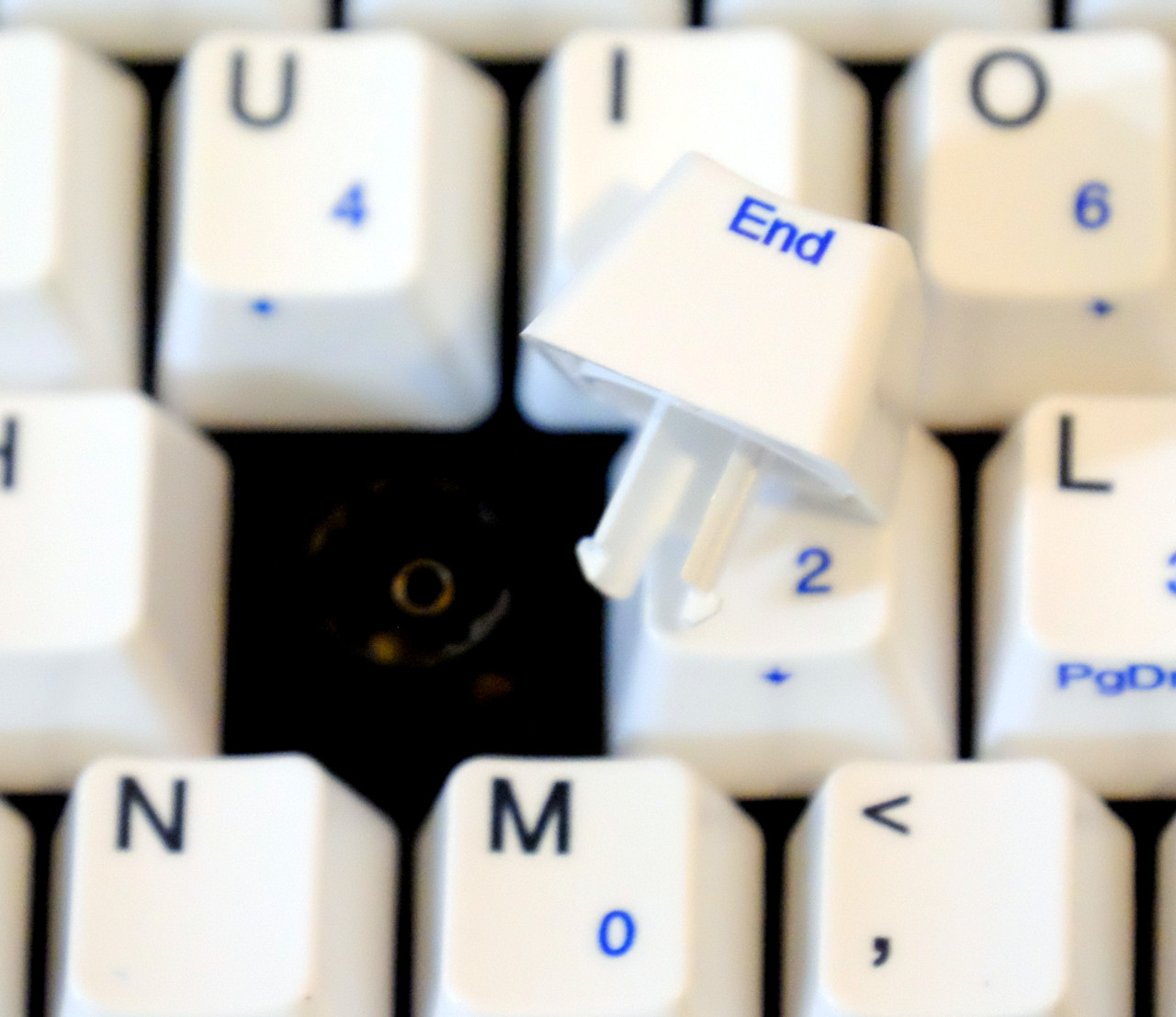
During the heyday of IBM hardware, computers and their keyboards came in the ubiquitous computer beige, the way IBM employees came to work in white shirts. Later, Unicomp, even occasionally by contract under the IBM banner, offered black as well. But it appears that these were pad-printed. Just as you cannot readily get white ink for writing on black paper (though the reason is somewhat different), dye sublimation does not work well when white legends are being applied to black keys.
Yet the Selectrics offered keys of many colors that had white legends that didn’t wear off. What gives?
There are several ways to impart legends to keycaps. There are the previously mentioned pad printing — think a rubber stamp — and dye sublimation, which uses heat to merge the dye into the base plastic. There is laser engraving, after which application of dye embeds the color beneath the surface of the keycap, making it more durable than pad printing, which just lays it down atop the cap, where it’s vulnerable.
The most durable is “double-shot” or “multi-shot” injection molding, which joins together separate moldings of keycap and legend. Think chocolate-chip cookies. This is generally the best, but it is also the most complicated and most expensive.
I asked the leading authority on all kinds of IBM keyboards how the Selectric caps were made.
“As far as I know, they are made of SAN [Styrene Acrylonitrile resin] just like [highly regarded and rare IBM] Model B (keyboard) keycaps,” he replied. “The main legends are multishot, though some (not all) front printing when present could be perishable.” Front printing is when there are the legends on the fronts as well as the tops of keys, such as the numbers on some Model M keyboards for use when the “NumLk” key is invoked. They needn’t be especially sturdy because nothing except crumbs and the occasional hair ever rubs against them the way the legends atop keycaps can be eroded each time they’re used.
There are several types of plastic employed in keycaps. Each has advantages and disadvantages. Some are wont to yellow with age. Others become brittle. Others tend to warp, making their use for spacebars and other oversize keys difficult or impossible. It would easy to get lost in the weeds here, but finding out that Selectrics were multishot, probably double-shot, is useful. We needn’t get into plastic compounds, at least not now, beyond my noting that I think the spacebar on my Mini M is made of ABS plastic, which is easy to mold but wont to turn yellow over time. I perceive it as slightly creamier in color to begin with, compared to the more difficult to mold but fade-resistant and sturdier non-spacebar keys made of PBT plastic.
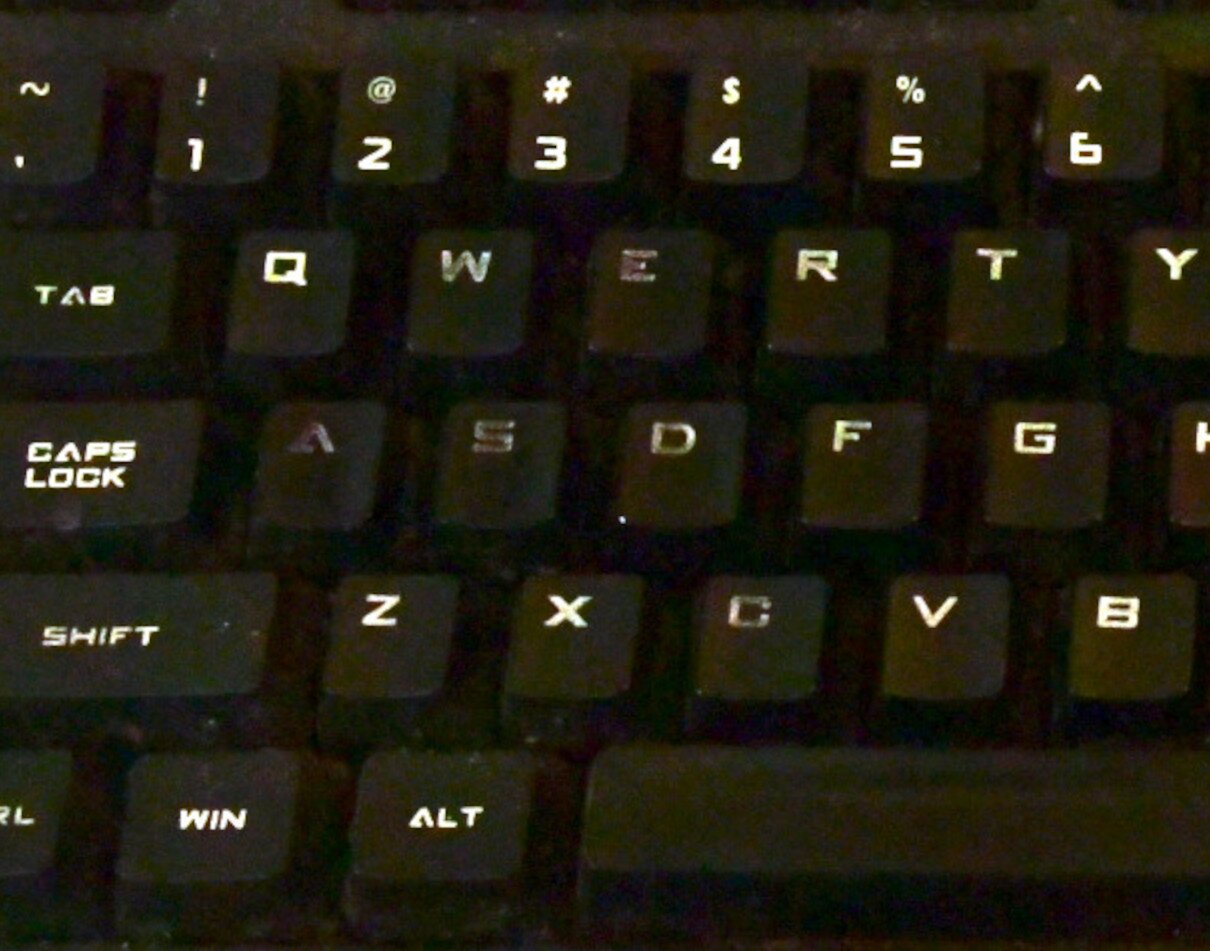
One can purchase all kinds of keycaps nowadays. There’s almost no solid material you can think of that isn’t used to make them. They’re offered in wood, metal, glass, just about anything and any color. And they do alter the sound of the keyboard, which is important to many of us.
But if you are wise enough to use a Model M keyboard, there is a problem.
The standard cap for cheap and/or trendy keyboards is now modeled on the MX style of keyboard switch, which is popular among keyboard hobbyists who often use keyboards for things other than writing, or at least that don’t have writing as their primary goal. The switches, invented by the German Cherry company and copied by just about everyone, are far different from the sweetly clicky IBM-style “buckling spring” ones. And the means of attaching the keycaps is different, too. So none of those zillions of fancy keycaps made in all different colors and materials will fit on a Model M keyboard.
The only Model M or Model F keycaps available are in white or gray. (Or black, on special order, with no legends at all). This is annoying to those of us who use those keyboards (though Adam J. Nagourney wouldn’t have minded). A few weeks ago Unicomp discovered a few old stock sets of black keys with white legends and put together a dozen or so keyboards to use them up. They were offered at about twice the price of the same models with white or gray keys. They sold out almost instantly. (And I understand they were pad printed, not the dye sublimation of Unicomp’s white and gray keycaps. I very briefly considered ordering one but, in a rare moment of adult behavior, didn’t.)
Ideally, all keyboards would have two-piece keycaps. This would open the world of keycaps, made using the cheap methods and the good methods, to everyone. I can’t find anyone who makes two-piece caps, which is a shame. But the world would be a better place if all keyboards came with two-piece caps, so only the tops would need to be switched around. Replacements would be cheaper and the design of the underlying switches wouldn’t matter.
You would think that in a world that offers literally hundreds of colors of keycaps and a wide variety of legend colors, at least one maker would crank out a set of good black keycaps with properly applied white legends that fit the Model M, but nobody does.
Of course, Unicomp could just tool up, or contract with someone else to tool up, for an offering of high-quality black keycaps with white legends (though it would be better if the company offered all the colors available for Selectrics — a deep maroon would be nice, and there was an attractive dark blue). They could well discover that there’s money in the project. Or Joe at Model F could — he has to get his keys somewhere. Then the problem would be solved.
I entered 2025 hoping that by year’s end there would be a good set of black keycaps for my Mini M. I end the year with the same hope, now for 2026, unless a black set appears in the next few hours.
Oh, well. It’s good to enter a new year with hopes, and a proper set of keys for my keyboard isn’t a bad hope to have.
Among others, because if cool black Model M keycaps were all the world needed, it would be a much better world than it is.
Have a happy new year.

Dennis E. Powell is crackpot-at-large at Open for Business. Powell was a reporter in New York and elsewhere before moving to Ohio, where he has (mostly) recovered.
Pass along this article.
Never Miss Another Article from Dennis E. Powell.
You need to be logged in if you wish to comment on this article. Sign in or sign up here.


Start the Conversation