Time passes quickly in a busy life, so it oughtn’t surprise me that 1989 was as long ago as it is. But surprise me it does.
One of the notable events of that technologically significant year (well, it was technologically significant for me, anyway) was the adoption by my favorite bulletin board system, or BBS, of RIME. The BBS was T I N Y in Poughkeepsie, and RIME was the Relaynet International Message Exchange. There were already ways of communicating online around the world, but they were complicated — Usenet — or really irritating — FIDO. The latter two still exist, which presumably means someone cares about them. I didn’t 35 years ago and I don’t now.
RIME was a lovely way to communicate with other people around the world. It was based on SIGs — special interest groups — rather than private, individual messages. You could write your messages online, but the cool kids used an offline reader. You would go online once a day, download all the messages in the SIGs to which you were subscribed, via a special protocol, and log off. Then, your phone line now available again for telephonic things, you could read and respond to messages of interest. It was a cool setup and in its day very exciting. When I was using a DOS-based system, my mail reader of choice was Deluxe-squared; once we were blessed with OS/2 I switched to MR/2.
I particularly remember an incident involving a war or disaster in Africa. I sent a message on RIME’s international affairs SIG, asking for details. I thought it was important enough (and I had a deadline approaching) to make a second call to T I N Y to upload it. Usually, you would upload your messages on the same call when you downloaded, and most BBSes did one mail run per day. So answers came two days after questions.
Two days later I found, in the international affairs SIG a long, detailed description of the incident — from someone who was actually there. It enabled me to write a column about the conflict quoting first-person detail, even though I never left my desk in New York. I thought that this was modern and incredible, right up there with my coverage of a Caribbean hurricane, also from New York, by listening to the United Nations ham radio station, OU1UN, over a Hallicrafters SX-110 shortwave receiver, as the UN attempted to contact the various small, stricken islands.
The speed of international communications has increased enormously in living memory. In the 1960s and early 1970s, you would turn on the evening news, hear about the latest battle in Vietnam — then see video of the battle reported upon three days ago. That was because the photographers would have to somehow get their film to Saigon and ship it on whatever transport was available, to New York, where it would be processed, edited, and finally aired.
I remember watching in 1962 the first live television broadcast between the U.S. and England, over the remarkable Telstar satellite. The show itself was a little boring, but what it represented was not. We were all excited about this most modern of marvels. There was even a hit song about it! (And another, lesser hit, in which it was thought that Telstar was a solution to teenage angst. It wasn’t.)
What we didn’t imagine in 1962 was that within a few decades we’d all be sending and receiving television, phone calls, something called the internet that wouldn’t be invented until 1969, via satellite (though more of that than you’d expect is sent even now over undersea cable).
Which is how I knew, almost as it happened, about something that all of the above is my procrastination in avoiding writing about.
If you have followed this column over the last few years you know that I’ve taken an interest in Japan. It is a fascinating place, with colorful history and culture and delightful people. I’ve even become friends online with a few people there, most of whom live in the lovely small city of Hakodate, the east side of the upside-down Y at the bottom of Hokkaido, the northern large island of Japan.
In Japan, there is constant threat of earthquakes. There is some danger from earthquakes everywhere. One of the largest earthquakes ever recorded took place in my birth state of Missouri in the early 19^th^ century. In the U.S. earthquakes have disrupted a World Series game, come perilously close to knocking down the Washington Monument, and of course almost destroyed San Francisco in 1906 (about which they are still very nervous).
But when it comes to earthquakes, we’re dilettantes compared to Japan. In just the last century (or so), there was the Great Kanto Earthquake that killed close to 150,000 people in and around Tokyo. On New Year’s Day last year the Noto Peninsula was devastated by a 7.5-magnitude earthquake that thoroughly wrecked the place and killed hundreds.
For sheer horror and anguish, it is hard to top what in Japan is known as “3/11,” though it is often called “The Great Northeast Japan Earthquake and Tsunami.” On March 11, 2011, an earthquake of 9.1 magnitude occurred in the Pacific Ocean off the coast of northern Honshu, Japan’s largest island. Much of Japan shook, but the coastal cities of the Iwate Prefecture were largely destroyed by the quake and the subsequent tsunami. Well over 20,000 people were killed. Many are still missing. Relatives and volunteers still conduct searches along the shoreline for remains. If you’re ever in the mood to have your heart entirely broken, watch this documentary about a small hospital in a small village. The staff could have escaped, but they wouldn’t abandon their elderly patients. All the patients died and so did all but one of the hospital staff, who was rescued after being swept away.
It happens without warning. That’s how earthquakes are. We endure weather disasters, hurricanes and tornadoes, for instance, but there’s always at least some warning. No so with earthquakes, despite efforts to predict them. Likewise tsunami, which as on 3/11 came splashing like an enormous child playing in a Pacific-Ocean-sized bathtub, killing thousands beyond those who perished in the earthquake itself. Sometimes there are enormous tsunami, sometimes not. They are studied, but our knowledge is far from complete or even reliably useful.
So if you know and care about people in Japan, you are nervous about earthquakes and associated disasters. And with our modern, super-fast communications, we learn about it at the speed of light. Two years ago I was working on some pictures when the messaging application I use beeped to life. Japan is 12 time zones ahead of us, and I thought my precious friend Risa was asleep. Which she had been until her one-word message: “Earthquake.”
It was, if I remember correctly, a 4.1. Enough to wake you up, but unless you have things placed precariously on shelves, which Japanese people learn to avoid, not resulting in damage. A 4.1 is not a terribly big deal. The moment scale of magnitude is algorithmic, not a straight scale. An 8.2 is not twice as strong as a 4.1 but more than 30 times as powerful.
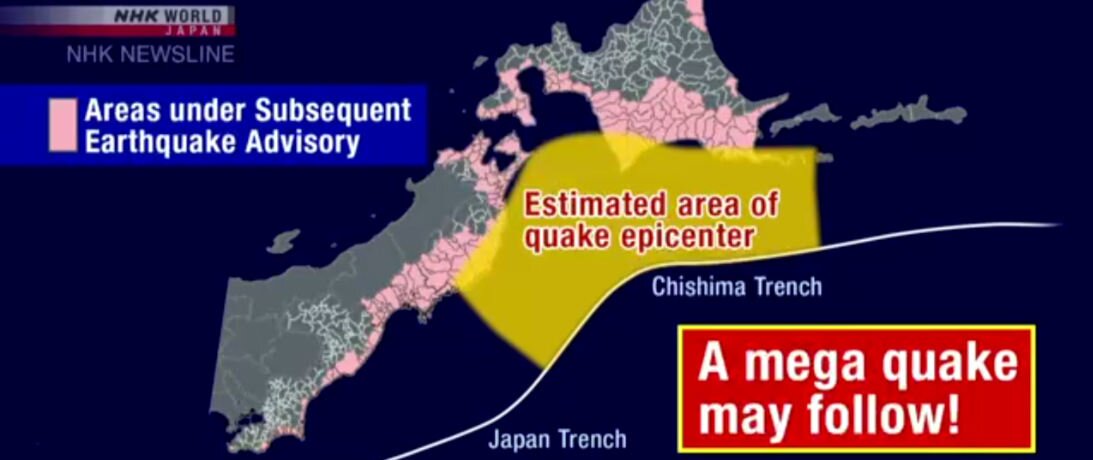
Which leads us to Monday morning, when the bulletin at the Japanese public broadcaster NHK told of an earthquake we’d soon learn was 7.5 magnitude. (The great San Francisco earthquake was about 7.9.) The Monday earthquake’s epicenter was a little bit north of that of the 3/11 quake. I sent a quick note to Risa but didn’t expect to hear back quickly. The earthquake was late Monday night in Japan, and she would have been at Nekomata, the small, cute Hakodate bar she owns. Then she would rush home to look after her cats. Keeping Yankee friends informed would come after that.
Looking at the USGS earthquake page and the maps tweeted by the Japan Meteorological Agency, I saw that the quake registered as a little over magnitude 5 in Hakodate. That’s enough to break things and, sure enough, local Japanese television soon had video of stores and facilities there, many products no longer on the shelves but now broken on the floor. A picture that especially struck me was of a library, most of the books knocked to the floor. I thought of how much I would hate to replace them, and how cheerfully Japanese people will do it, all the while giving thanks that the earthquake was no worse.
Tsunami warnings were up for several hours, but none that amounted to much appeared. Fifty people were hurt, but no one was killed. You’d think that the whole business was now over.
Not quite.
The meteorological agency issued a warning. If you’ve paid attention to any earthquake report, you’ll know that it is standard to worry about the potential of strong aftershocks. This time the warning went well beyond that. It said that there was an increased likelihood of a “mega quake.” It was the first time such a warning had ever been issued. While the likelihood is low — about 1 percent, I’m told — that’s still 100 times higher than usual. We were reminded that there was a 7.3-magnitude earthquake in the same region on March 9, 2011 — followed two days later by the 3/11 quake.
NHK sent out a warning to people in Japan: “Japan Meteorological Agency has issued the ‘Hokkaido-Sanriku Offshore Late Earthquake Warning Information,’ stating that the possibility of a major earthquake occurring is increasing. Continue to check your preparations from the day to the day. . . .
“It does not necessarily mean that a major earthquake will occur, so we are not asking for evacuation in advance, but for the next week we are asking for emergency bags to be prepared so that people can escape quickly.” Survivalist preparation when there’s a real chance of having to react in order to survive — it’s not a goofy hobby in Japan.
So it was and is a nervous time. I sent a note to a great photographer who lives in Hakodate, and who makes a point of visiting each morning a small seaside park that honors the poet Takuboku (who early in his life had been a reporter for Hakodate Shimbun, the local newspaper). I said that in light of the tsunami threat maybe he should skip it that day. He warmly thanked me for my concern and, bless him, went anyway.
One tries to keep the mood light in such situations. There is a lot of snow in Hakodate, with more expected. I joked that it is probably particularly hard to drive on slippery roads during an earthquake. I was told that it is no joke.
There have been more than two dozen noticeable aftershocks — the strongest being a 5.9 today. Risa wrote that the aftershocks made it hard to sleep. Imagine a situation in which you can’t sleep because of all the earthquakes!
Japan is accustomed to threats from nature. There are people who live on the slopes of active volcanoes that could erupt at any time. There are volcanoes close to much of the country — Fujiyama, Mount Fuji, is a volcano that will one day erupt anew. The response? Make personal and commercial use of the abundant hot springs. Not far from Hakodate is a place known as “Hell Valley.” It is often commented that the people who live on the slopes of volcanoes seem abnormally calm and peaceful, living day to day.
Maybe there is some place in the world that is utterly and constantly free of threats from nature, has no natural sword hanging over its head by a thread. If so, I’ve never heard of it.
And now, 35 years after RIME kept me in touch with the world, only a couple days’ delay, I can know in seconds of threats to people I care about. I’ve discovered that I worry about them more than they seem to worry about themselves.
Dennis E. Powell is crackpot-at-large at Open for Business. Powell was a reporter in New York and elsewhere before moving to Ohio, where he has (mostly) recovered.
Pass along this article.
Never Miss Another Article from Dennis E. Powell.
You need to be logged in if you wish to comment on this article. Sign in or sign up here.

Start the Conversation