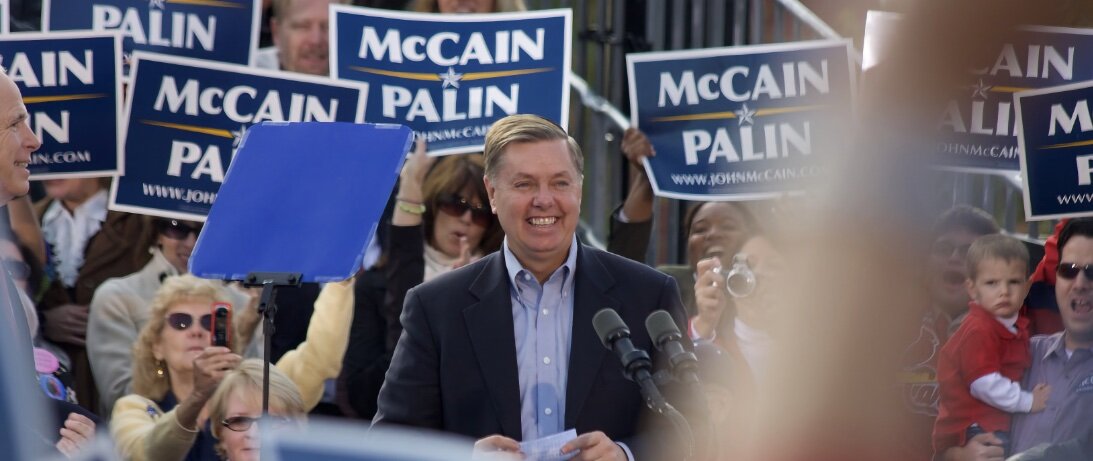
I didn’t know him personally. He was never my senator. But the passing of Lindsey Graham really has struck me. The more I think about his passing — and the responses from those who long worked with him — the more I think I know why.
For those who did know Graham, even those who disagreed with him, I’ve been struck by the consistent stories about the man he was. Yes, we soft focus the memory of people upon death, but the reflections from those who served alongside him were not the trite kind we often expect.
Of course, his present political allies remembered him in glowing terms. It isn’t hard to believe President Trump would want to honor him, though his words showed a man moved by the passing of a genuine friend — a side of the president we don’t often see. So it was with many amongst the administration and its allies; a few of whom used the moment for political points, but most of whom seemed shellshocked by a genuine loss.
None of that is weird, but in our political world it was odd that someone could move the current president and also President George W. Bush at the same time. Had their passings been reversed in order, no doubt Sen. John McCain, the 2008 GOP presidential nominee, would have added emotionally to the chorus, for the well documented friendship he and Graham shared.
Though Republicans all, the party has so changed, few are the times someone appreciated deeply by the former president overlaps with someone admired by the current one. And for McCain, always the “maverick,” to be likewise aligned — it is clear something about Graham was a common thread deeper than political platforms.
And not only Republicans. Democratic Sen. Amy Klobuchar, hardly a conservative by any measure, wrote of the “shock” of her friend and colleague’s passing as she reminisced warmly about his loyalty, determination and love of the work he dedicated his life to. Sen. Cory Booker, another Democratic firebrand, said he was “stunned” and, like Klobuchar, reflected on his “unlikely friendship” and the profound things they’d accomplished together.
The list could go on and on, with such unlikely friendships. Sen. Joe Manchin observed, “Every politician wishes they had likability, and Lindsey had it in spades. No matter what you thought of him, if you ever knew him or talked to him, you walked away liking him, and that’s a gift.” Sen. Ted Cruz, similarly noted, “He was liked and adored by people who didn’t necessarily agree with him on issues, and when he was on your side, I believe he was the most potent ally in the Senate.”
Every politician does try to be liked, but it seems an entirely different thing for those who spend a lifetime crafting a likability facade to encounter one of their own and find that likability genuine, rather than merely a matter of expedience. Memorial statement after memorial statement points to Sen. Graham as a genuine friend, not a mere death requiring proper political comment.
The recollection of Health and Human Services Secretary, Robert F. Kennedy, Jr., was charming for the fact that it remembered a time before Graham and Kennedy found themselves politically aligned. “In November 2019, I ran into Senator Lindsey Graham in the Capitol Rotunda while I was giving a speech during a demonstration for clean water. Although we stood on opposite sides of the political spectrum at the time, he invited me into his office and made me a cup of coffee.”
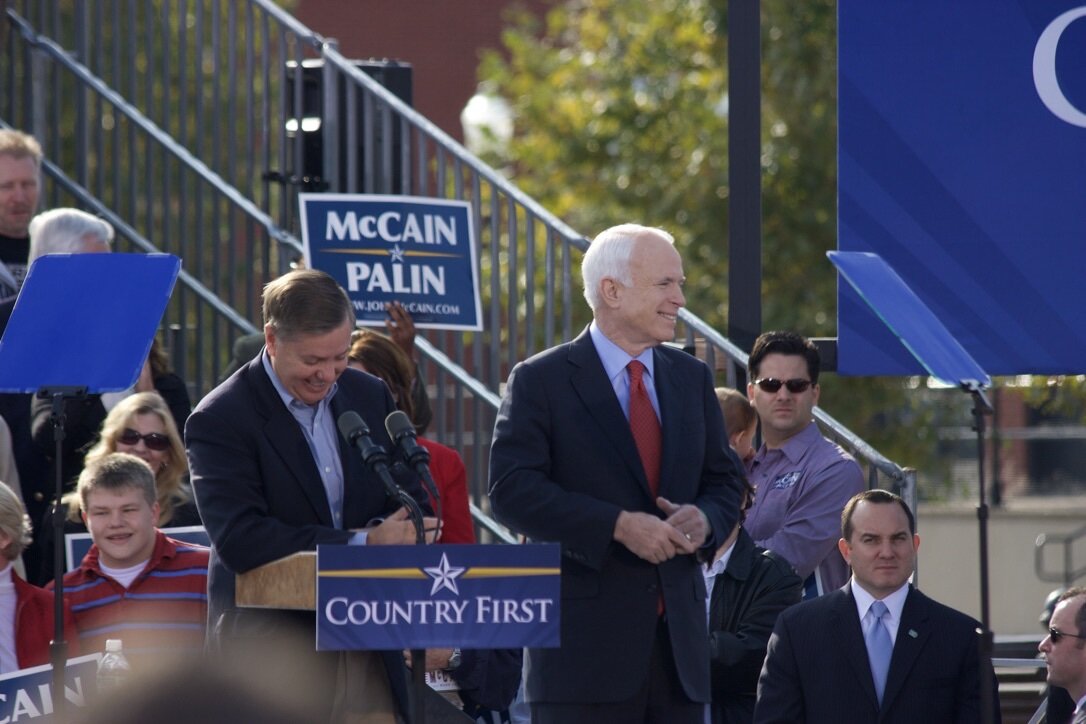
Though my personal closest connection to Graham was to watch him speak at a large event nearly two decades ago, he did have a knack for seeming to be the “friendly neighborhood senator” that we all “knew.” He wasn’t always rattling off comedic quips à la Sen. John Kennedy, but he did have a disarming presence enhanced by his gentle Southern accent and a lower key humor that led comedian and former Sen. Al Franken to call Graham “the funniest.” His accessible persona worked for so long, it seems, because all of these accounts point to something behind it: genuineness.
That’s rather rare in politicians.
And, so too, principle. Though many were the times someone in the GOP was raging at Graham and wanted to primary him, his ins and outs with the party’s preferences were driven by the man’s set of reliable principles. He served alongside McCain in the so-called Gang of 14 to restrain certain lesser impulses in the Senate, at least for a time. He famously voted to confirm now Justice Elena Kagan, despite vast ideological differences, because he leaned into the traditional principle that judges are selected because of their qualifications, not one’s partisan preference.
(A point she reflected on with gratitude in remarks to Congress after his passing.)
His principled style was perhaps most in view on international matters. He consistently spoke out about evils around the world, savvily but without regard for whether foreign policy concerns were the topic du jour. No wonder two of the first, heartfelt memorial notes came from leaders of two of America’s best allies, Israel and Ukraine. Each country faces bitter enemies wishing to annihilate them and their democratic and pro-American ways while — oddly — it seems almost required that American politicians hate both or, at least, hate one while defending the other. Graham defended both, even when it wasn’t politically popular.
The personal friendships across prickly divisions, the consistency on foreign policy that was a hallmark of his political career and his long service in the United States military (even as a continued reservist after running for office) point to a man who actually believed in something beyond just getting re-elected.
For our cynical impulses, the New York Post offered one final confirmation on that point right after his death. When so many politicians use their positions to accumulate wealth, how much was a man with decades of political standing, the ear of numerous presidents over time in both parties and key Senate chairmanships worth? Far less than most of his colleagues. At $1.5 million dollars, his net worth is actually explicable, unlike far too many of his colleagues.
In an age where political power is intended for personal gain, maybe the man who started his adult life by adopting his little sister after their parents’ deaths actually genuinely did steward his position. Maybe truly remembering even opponents’ humanity is not in opposition to wielding profound power.
Maybe, just maybe, Graham’s gift to us right now is to remind us that principle, integrity and care for even those we disagree with are not the ingredients for failure.
Part of the sadness I’ve felt isn’t just the loss of that familiar, gentle drawling voice making a political pitch, but the character behind it that feels of a lost age. A time when — despite the ever-present corruption and backroom dealings in politics — it seemed many representing us really did believe in something and remembered our common humanity and held to a shared set of ideals far greater than a party platform.
We’re well overdue for more such men and women in our political realm. I hope as the nation mourns the loss of Graham, we’re reminded that he needn’t be the last of such a kind. 

Timothy R. Butler is Editor-in-Chief of Open for Business. He also serves as a pastor at Little Hills Church and FaithTree Christian Fellowship.
Pass along this article.
Never Miss Another Article from Timothy R. Butler.
You need to be logged in if you wish to comment on this article. Sign in or sign up here.

Start the Conversation