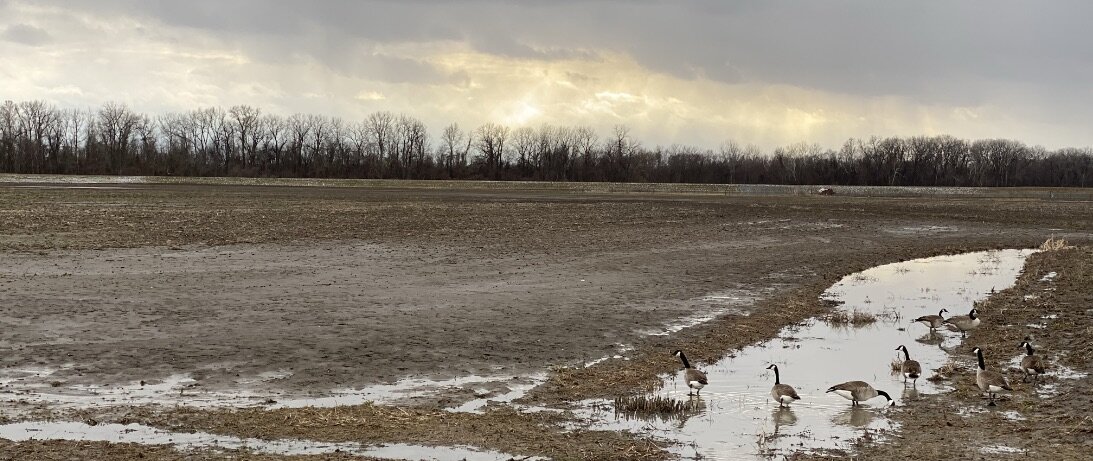
Don’t you just love spring flowers? Here we are, coming up to Easter and spring flowers are blooming outside. But the process of planting spring bulbs is really kind of strange if you think about it.
We take these things that don’t look like much of anything — they’re certainly not pretty — and plant them in the ground months before they’re going to bloom. And then we wait for them to do something. Will they? Hopefully. But you can’t tell.
If you get wild and plant them kind of willy nilly, you might not even be sure if you’re looking in the right spot. Is there anything that’s going to come up here?
God’s promises can feel a lot like that. Will they sprout up? When we think about our lives we may ask ourselves, “Am I on the part of the ground where God planted bulbs? Is He going to sprout things here? Or is this ground just dead?”
We go by what we can see, so we struggle when we’re just running on hope. What do we do in those “we don’t know” moments? We turn to Psalms like the twelfth one. As we do, God speaks to those seemingly dead-ground moments to reassure us.
“Deliver, Lord. For the godly have disappeared, people of integrity. Have vanished. People lie to one another. They flatter and deceive.”
That’s the state that we’re in, right? It’s muddy, cold and dead. The godly often feel like they’re missing. We look in this world and we think, if God’s brought up a garden of beautiful amazing flowers of his people, it sure doesn’t look like it.
King David wasn’t the only one to express such a sentiment in Scripture. The Prophet Elijah did as well in 1 Kings 19:14. Elijah plays a part in an incredible miracle but those opposing the Lord threaten his life and any triumph melts away.
He says, “I have been absolutely loyal to the Lord, the sovereign God, even though the Israelites have abandoned the agreement they made with you, torn down your altars, and killed your prophets with the sword, I alone am left, and now they want to take my life.”
If you ever felt alone and trying to follow the Lord, you’re in good company. It’s part of how we process as creatures who can only see the dead ground, even when we see God working.
I think this is a good place to dwell on Holy Week, because it speaks to how the disciples felt for at least part of that week.
Talk about the roller coaster of emotions here — Palm Sunday was so majestic, but then everything unravels. Jesus doesn’t immediately become king, those opposing him still argue with him — and then succeed in arresting him. You get to the end of the week and… how, as a human being, does one process that this Savior that you’ve been following was being hailed at the beginning of the week and is dead at the end?
The ground looks awfully dead when moving from Palm Sunday glory to Good Friday darkness.
The disciples, they weren’t hearing anyone saying, “Please come back on Easter for the hope,” because the One who told them that sort of thing, well, He was in the tomb. And yes, He told them ahead of time how this would go, but in that dark moment, all they can see was that they were very alone.
Have you seen the last Kmart in the continental United States? It doesn’t look much like a Kmart, because it is a shadow of the former retailer crammed in exile to what had once been merely its garden center while the rest of the store was redeveloped for another retailer.
How does Kmart ever come back from this? Technically, it’s still in business. But do I think that there will be a day you can drive over to the local Kmart for a Blue Light Special again? I’m pretty skeptical. The momentum is going in the wrong direction.
If you’d built your life on Kmart, you’d say, “All the Kmart loyalists are gone, there’s not one good Kmart left. There’s no way it’s coming back,” and you’re probably right.
Is the situation for God’s people the same?
As David goes on in Psalm 12, he observes the forces opposed to God boast of their wicked ways’ triumph — and they appear to have it. Here’s what David does when it feels that deadness: he comes to the Lord and asks not to feel the emptiness, but to feel God’s presence to see God work.
The challenge when we face emptiness is to look away from the evil we witness and towards the God who is faithful to you and me. Like David, the disciples were faced with that challenge on Holy Week. Were they going to look to the One who is true and righteous or were they going to look to the ones with conniving tongues who had seemingly killed the Savior?
At first, they run in fear. Despair takes hold. But where they ultimately go is what gives us the rest of this story. Like David, they come back to the Lord.
It’s okay sometimes if we’ve run in fear. It’s okay if sometimes we’ve been hiding. We can still say, “I want to stop and see you, Lord.” We aren’t even “reaching out” to Him, because He’s already there.
In Psalm 12, David realizes that yes, it feels empty, but it’s not.
Sometimes we just feel like we’ve fallen from a plane and been abandoned. I saw a striking video at the beginning of the War with Iran. In this video, a female American pilot is shown having parachuted into Kuwait when her plane was shot down.
I tried to picture myself in this pilot’s position as she thought about what it meant to land alone in the desert. She might have wondered, “am I going to fall into an enemy area and they’ll kill me for that? Am I even going to survive as I hit the ground? I might just die out here before anyone even finds me.”
In the video you hear the person who’s recording racing towards her saying, “It’s okay, you’re safe. Thank you for helping us.” This pilot wasn’t dropping down into a desert of emptiness, even if it looked that way. “You’re safe. Everything is good. Thank you for helping us.”
In the desert, there’s rescue. In Psalm 12, God’s saying those words to reassure David. The beleaguered psalmist knows he can still come to God. He feels like he’s just parachuted out into the wilderness into the desert, into this hopeless place, but importantly he knows what he feels isn’t the reality.
That parachuted out feeling is all too familiar to most of us. Maybe we’ve stepped out in faith to do something that God’s called us to do. Now it feels like it’s actually coming against us.
But as we read the Psalm, God’s saying to us, “You’re safe.” As we’re in the desert. We’re safe. And unlike that man racing towards the pilot who had parachuted out of the plane we’re truly safe.
That man wanted to reassure her, but if she’d been injured in the fight, maybe she wasn’t really going to be okay. He couldn’t guarantee it. He couldn’t guarantee that overall everything would go well. He couldn’t do it, but God can. He can promise that we’re safe and make it so.
We’re actually safe.
If you don’t know where your life’s going right now, and you’re wondering if you’re safe, read Psalm 12. If you’ve taken a stand and it seems to backfire on you, God’s message in this Psalm is for you. If you’re in that dead field and you’re wondering if those bulbs are ever going to sprout, God says, “my promises always sprout.”
And we can trust in that because of what happens this Holy Week.
We go through that darkness, but we realize in that darkness God isn’t thwarted. He’s not failing. He’s actually doing what is necessary.
When we crash and we wonder what we should do, we can look to Him because what do we find? He’s right there with us in the rubble. 
This column is adapted from a sermon preached on Monday, March 30, 2026. The full message can be found here.

Timothy R. Butler is Editor-in-Chief of Open for Business. He also serves as a pastor at Little Hills Church and FaithTree Christian Fellowship.
Pass along this article.
Never Miss Another Article from Timothy R. Butler.
You need to be logged in if you wish to comment on this article. Sign in or sign up here.

Start the Conversation